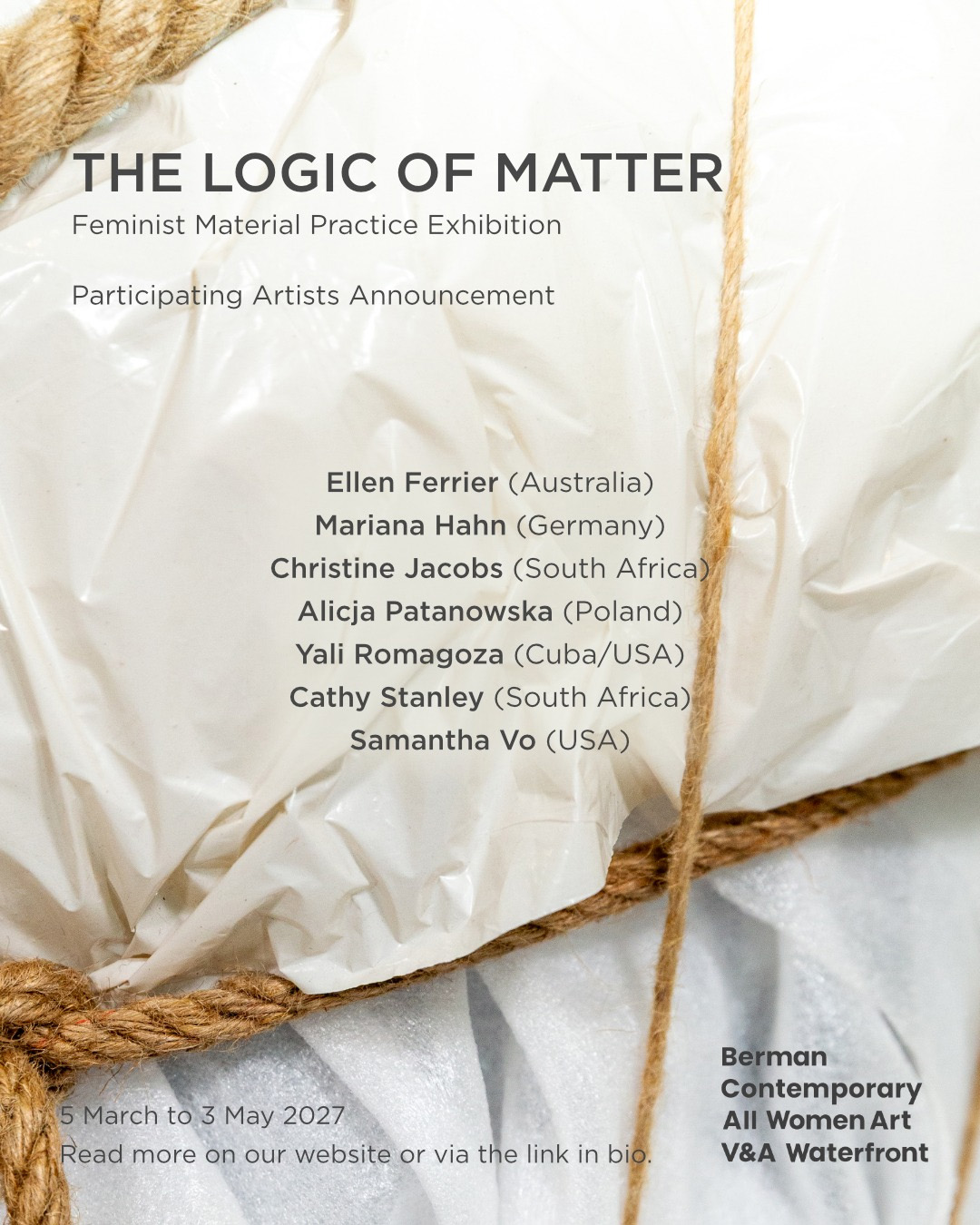
THE LOGIC OF MATTER
Feminist Material Practice
5 March – 3 May 2027
This exhibition begins from a simple proposition: making is a methodology through which artistic knowledge is produced. Within these practices, materials shape artistic enquiry through their particular properties, temporalities, resistances, capacities and histories. Knowledge emerges as artists work with these conditions, testing, revising and extending their thinking in the act of making itself.
The Logic of Matter brings together seven artists whose practices are grounded in distinct methodologies for working with matter. Although their materials, processes and cultural contexts differ, each approaches making as a form of enquiry in which ideas are discovered rather than simply realised. The artwork is not the execution of a concept conceived in advance, but the outcome of sustained engagement with material conditions.
The exhibition approaches feminist material practice not as a shared aesthetic or iconography, but as a way of understanding how artistic knowledge is produced. Knowledge is situated, embodied and relational, emerging from sustained engagement with the material world rather than detached observation or abstract conception. The artist remains central – not as the sovereign author of matter, but as the practitioner who learns from its conditions. Reciprocity is therefore understood not as shared authorship between artist and matter, but as the condition through which artistic knowledge becomes possible.
The title, The Logic of Matter, refers to the conditions that materials present to artistic practice. Every material behaves according to its own possibilities and constraints, shaping both what can be made and how it can be made. The logic of matter is not an invisible principle hidden within materials, but something that becomes knowable through practice. Artistic authorship develops through continual negotiation with these conditions. The artwork bears the trace of decisions, adjustments and discoveries made in response to matter’s particular demands and possibilities.
Rather than proposing a shared visual language or unified aesthetic, The Logic of Matter argues for a shared mode of enquiry. The exhibition is organised not around medium, geography or identity, but around practices that demonstrate how artistic understanding emerges through sustained engagement with the material world. In this sense, feminist material practice is distinguished not primarily by what it represents, but by how it comes to know.
Artist Propositions
Ellen Ferrier (Australia) explores material invention, cultivating her own bioplastics and working with tree sap, wool, earth pigments and plant matter to create provisional material ecologies.
Mariana Hahn (Germany) investigates material transformation, working with wax, salt, copper and water to create processes in which change itself becomes the work.
Christine Jacobs (South Africa) develops a practice of material care, using wool to create sculptural vessels that consider holding, gestation, nourishment and protection.
Alicja Patanowska (Poland) investigates how materials carry ecological, cultural and embodied knowledge through ceramics produced with mining wastewater and participatory practices centred on collective making.
Yali Romagoza (Cuba/USA) approaches material repair, using hand-pulled linen to investigate belonging, identity and continuity through repeated acts of making.
Cathy Stanley (South Africa) develops ecological processes through bulbs, soil and other living materials, allowing growth, weather and decay to shape the work over time.
Samantha Vo (USA) examines material inheritance, bringing together steel, concrete, textiles and found objects to explore how labour, memory and women’s histories become embedded in material form.