
Amogelang Maepa
One-night stands in white mustangs
Artist Bio
Her sculptures are fused with poetry drawn from personal experience. Intimate and direct, the accompanying texts are not illustrative but catalytic: they ignite connection and open space for dialogue. The honesty of her writing shapes the physical language of the works, resulting in forms that feel both vulnerable and insistent.
Maepa completed a National Diploma in Fine Art at Tshwane University of Technology (2017), majoring in Ceramics and Printmaking. Her work has been presented at the RMB Talent Unlocked programme at Turbine Art Fair (2019), 1-54 Contemporary African Art Fair in London (2021–22), Investec Cape Town Art Fair (2023), and Art Cologne (2023).
Since 2020, she has participated in multiple group exhibitions at Berman Contemporary. In 2026, she opened her first solo exhibition, One-night stands in white mustangs, at Berman Contemporary in Cape Town.
Her work is held in private collections.
Amogelang Maepa is represented by Berman Contemporary.

Artist Statement
Silent Shrills speaks about letting go of control, allowing things to fall away, break apart, or fade. It is something I have always struggled with.
The works carry the feeling of taking a deep breath and slowly releasing it. Parts of the forms appear raised, almost inflated, as if holding air and then letting it escape through tiny holes.
Ironically, these openings look and feel uncomfortable. The release has not been gentle. It has been tense and uneasy.
There is a knot in these works: something that sits around the neck, something that lingers in the corner, sometimes under the bed. In my world it makes sense, even if language tightens when I try to explain it. I can only make artworks about this feeling. I follow it with my fingertips until it becomes clay.
Through these works, I want that sensation to become visible, or at least shared.
I only know how to describe what moves through my head with my hands and through unfinished lines I call poetry. It is the way I make sense of things.
I am grateful to have arrived here with a full body of work, to have moved beyond what came before.
The silent shrills are mine.
Curatorial Statement
A solo exhibition by Amogelang Maepa
Curated by Karolien van Zyl
Berman Contemporary, Cape Town | 7 March 2026 – 3 May 2026
One-night stands in white mustangs begins in language and continues in clay. Each sculpture emerges from a poem written before the clay is touched. The works do not illustrate the texts; they translate rhythm, repetition and internal pressure into form. Desire operates here as a system rather than catharsis, structuring how material gathers, repeats and resists resolution.
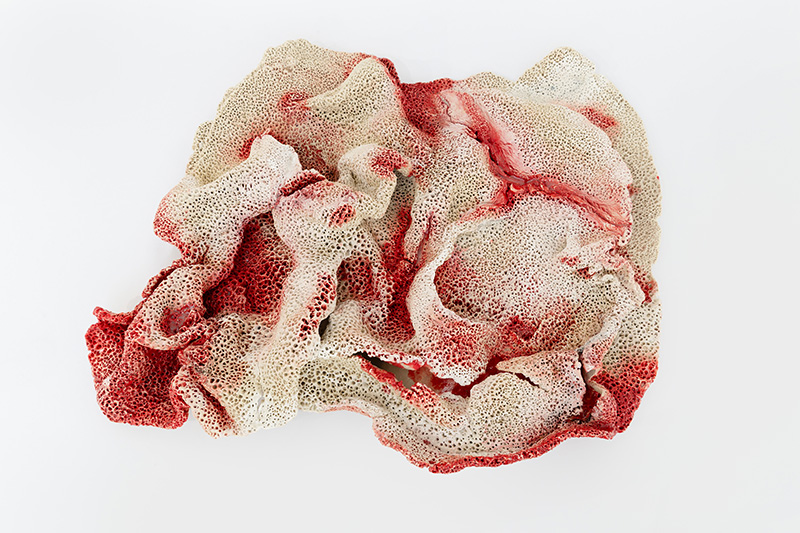
Across the series, desire registers materially. Intensity gathers rather than disperses. Porous surfaces, thickened edges and areas of distortion suggest accumulation instead of completion, as if pressure from within has forced its way outward. Cellular textures, clustered deposits and ruptured skins convey the effect of force acting on matter over time. Each work holds the trace of processes that have built up, spread and unsettled.
Desire is approached not as fulfilment, but as recurrence. Forms repeat without stabilising. Surfaces retain what has passed through them. What remains is residue – the mark of intensity rather than its release.
The exhibition extends this logic beyond the objects into the surrounding environment. Reflective surfaces disrupt a single point of view. Objects, space and viewer enter the same circuit, where encounter is brief, partial and repeated.
The exhibition sustains a condition rather than a narrative. No single work resolves what it begins. Meaning does not settle; it lingers in a state of aftermath.
Something has happened. Whether it mattered remains undecided.
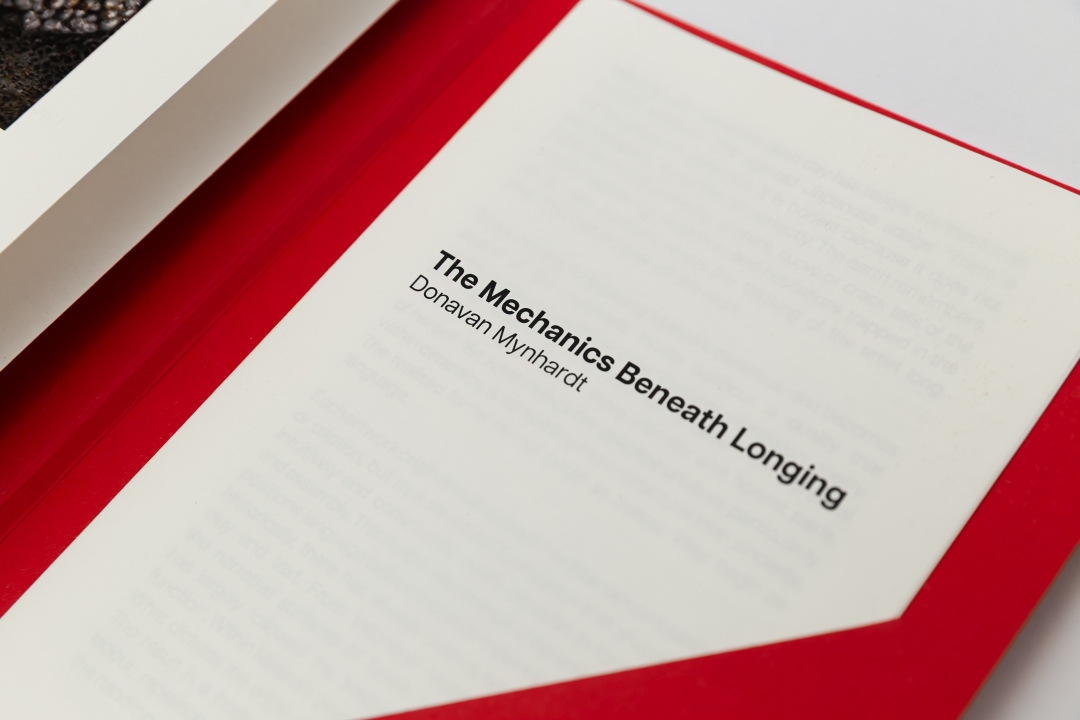
Critical Essay – Donavan Mynhardt
Donavan Mynhardt
Working with ceramics each day has taught me that it is an honest medium. The age-old Japanese adage: “There is no falsehood in ceramics. It is honest because it does not hide its scars,” sums this up perfectly. The earth remembers. Each recorded pressure, gesture, curve or crack tells of the creator’s patience, resilience, and hesitations trapped in the damp clay. Surfaces reveal the thinking of the artist long after their hands have left the work.
Encountering Amogelang Maepa’s ceramics, one becomes aware of the material’s innate candour, a quality that partners naturally with her other mode of expression: poetry. She has spoken of how both forms draw from personal experience, revealing the more intimate and honest parts of herself. Yet what makes her practice unusual, particularly within ceramics, is something more structural than sincerity. The realised forms do not begin as matter. They begin as language.
Each artwork originates as a poem, not as an accompaniment or caption, but as a structural foundation that shapes, both intuitively and consciously, every decision in form, surface and assembly. This deliberate reversal of ceramic convention positions language before material, meaning before making. Historically, there has always been a relationship between clay and text. From inscribed Mesopotamian tablets to the narrative surfaces of Greek vessels, this relationship has largely followed the traditional logic of ‘form follows function’. Within Maepa’s practice, that logic no longer holds. What dictates the origin of meaning here is language itself. The result is a body of sculptural forms in which desire, labour, repetition and exhaustion become visible through the handling of clay.
Italian archaeologist Agnese Livia Fischetti once described ceramics as “the only poetry that can be touched.” Every indentation, mark, or crack in the clay acts as a verse or line, recording the maker's hand and experience. Maepa’s ceramics operate as the physical extension of her poetry, sharing the same structural approach. Repeated lines become repeated gestures. Lingering phrases become thickened surfaces. Interrupted thought becomes fracture. In poetry, desire may unfold through enjambment and refrain. In clay, it unfolds through repetitive handling, coil after coil, press after press, slowly revealing itself in the visible trace of effort. Negative space, like the silence between words, is essential to the story that unfolds. By translating poetic language into material form, Maepa exposes the mechanics beneath longing; the work required to sustain it, the pressure it produces and the fractures it threatens.
The ceramics selected for Maepa’s solo exhibition One-night stands in white mustangs propose a deliberate repositioning. Where her work might first be read through the lens of intimacy or confession, or assessed against ceramics’ long association with utility, this exhibition asks for neither. Desire, longing and obsession are present, but they are approached here as conceptual systems rather than emotional disclosures; patterned, cumulative structures that demand intellectual engagement as much as feeling. This is what moves her ceramics from the utilitarian toward the sculptural. And yet concept and feeling need not be mutually exclusive. Even through a strictly cerebral lens, the traces of longing infused in each form remain fully present, waiting for the attentive viewer to find them.
The choice to work primarily in paper-clay is more than practical; it is conceptually resonant. Clay embedded with paper fibre carries an implicit reference to poetry’s natural home, deepening the dialogue between material and idea. Technically, the added organic fibre creates an internal support network that allows greater freedom in shaping and superior strength when dry. But beyond its structural advantages, the considerable malleability of paper-clay enables Maepa to redraft her verses into three dimensions, producing a sculptural language that mirrors the rhythmic structures of the poems from which it originates.
“I have stabbed you continuously only to resurrect you again
And again, and again and again and again and again
Only to keep stabbing you continuously
Until you are completely mine”
(Sin or No Sin, Amogelang Maepa)
The stylistic texture of her poems translates naturally into process-driven and systemic conceptual ceramic work, particularly in its repetition, cyclical action and intensity. The tempo, tension and obsession of the poems are not just embodied in the clay though, they are performed through it. Many of Maepa’s clay forms spill and stretch and collapse into folds, creating the illusory appearance of continuation beyond their boundaries. This physical lack of any clear beginning or end echoes the use of enjambment within poetry. The surfaces become part of the narration, keeping record of repeated actions as the clay captures every mark made by the maker’s hand and tool.
Through the acts of pushing, coiling, folding and pinching, the body’s engagement with clay leaves behind a somatic residue. These surfaces register fatigue and insistence, longing and withholding. They are not merely illustrative depictions of emotion, but the physical enactments of it. Tight coils, binding gestures, clustering forms and compressed areas materialise the desire, obsession, control and containment expressed through verse. Maepa’s ceramics literally show that they have endured something.
The resulting artworks are coloured minimally and treated with clear glaze to reveal any surface tensions and deckled edges. Many surface areas are covered in persistent puncture marks or layers of thick, compressed clay. The ceramic piece I Will Know Hunger is decorated by absence, clay removed to leave a pattern of irregularly shaped holes across a delicately thin surface. What is taken away becomes the statement.
Firing too is conceptual. Heat does not merely harden clay. It finalises tension and transforms earth into ceramics. It seals labour into permanence. What was once malleable becomes irrevocable. In this transformation the work mirrors the emotional states from which it emerged, exemplifying moments that cannot be undone, only endured. The kiln also burns away untruths, revealing underlying imperfections within clay structures. Unintentional crazing, blistering, cracking or bloating are the concerns of ceramists bound by utility. Here, freed from that obligation, these perceived flaws carry conceptual weight, they are not failures of making but evidence of it.
Wabi-sabi, the Japanese philosophy of beauty in imperfection and impermanence, resonates throughout Maepa’s work. Surface tensions and hairline fractures have been left deliberately exposed, not as oversights but as carriers of meaning. Damage here is not defect but record. In a practice rooted in poetry, where feeling is structural and process is argument, the pursuit of perfection would be a contradiction. Her work is not about functionality. It is not about the ideal. It is not about concealment. It is about becoming the structural embodiment of words. And words, at their most honest, can be unfiltered, abstract and raw.
South African ceramics have entered a period of conceptual expansion, crossing boundaries between sculpture, installation, performance and text. Across generations, practitioners have pushed clay beyond utility into territory that is intellectually rigorous and materially complex. Yet within this landscape a specific gap has persisted. Where the discourse has turned outward toward cultural memory, socio-politics or identity, the interior life has remained unexplored as serious conceptual territory. Maepa is a distinct and necessary voice precisely because she turns inward. She excavates the emotional, psychosocial and rhythmic systems that structure interior experience, and she does so through a methodology that is entirely her own: language as foundation, clay as its consequence.
By removing the obligation of use, she frees clay from its historical association with functionality and the potter’s relentless pursuit of perfection. What remains is clay as sculptural articulation: autonomous, resistant, and fully intentional. Her contribution to South African ceramics is specific and irreducible. The poem is not supplemental but architectural. Clay does not decorate the language but solidifies it. In doing so, Maepa produces a body of work that not only represents lived experience but gives material form to the mechanics beneath longing.
Donavan Mynhardt is Curator of Rust-en-Vrede Gallery + Clay Museum
Poem (audio and text)
Amogelang Maepa
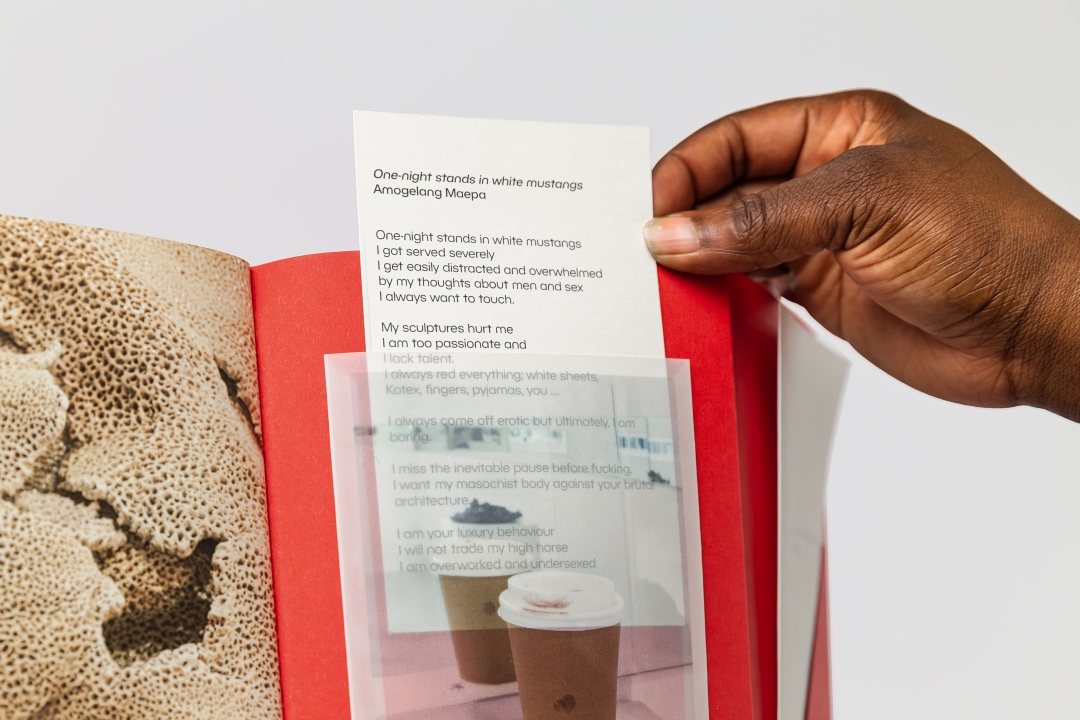
One-night stands in white mustangs
I got served severely
I get easily distracted and overwhelmed
by my thoughts about men and sex
I always want to touch.
My sculptures hurt me
I am too passionate and
I lack talent.
I always red everything; white sheets,
Kotex, fingers, pyjamas, you …
I always come off erotic but ultimately, I am
boring.
I miss the inevitable pause before fucking.
I want my masochist body against your brutal architecture.
I am your luxury behaviour
I will not trade my high horse
I am overworked and undersexed
Publications
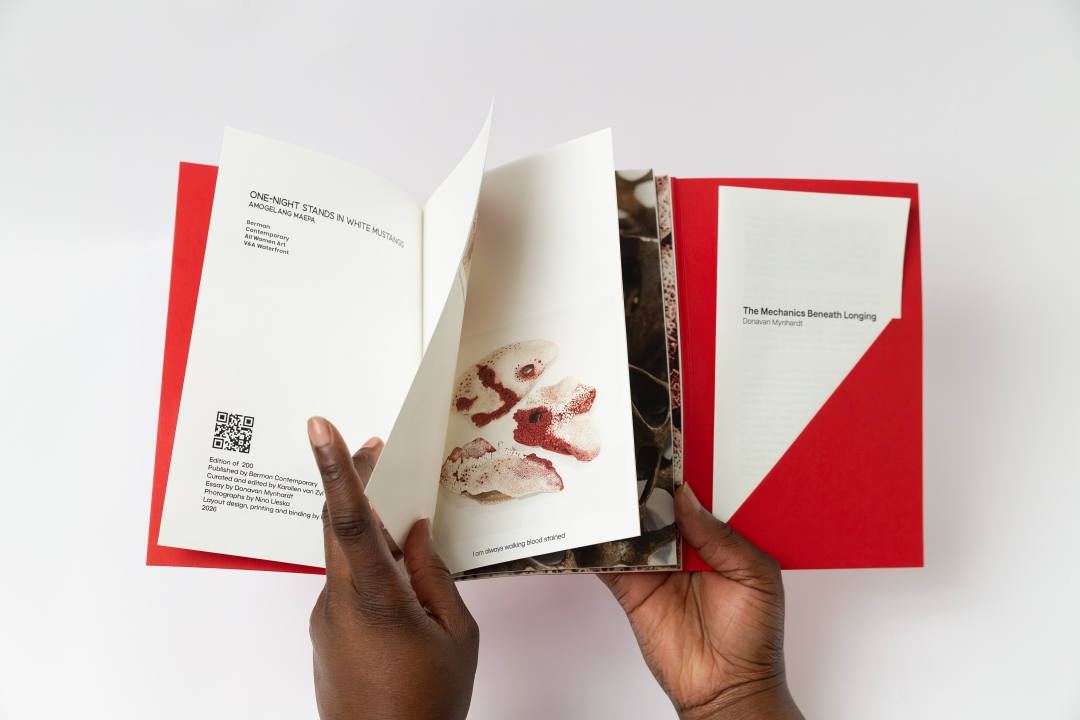
One-night stands in white mustangs (edition 200), 2026
Essay insert by Donavan Mynhardt: arena natural white 90gsm
21 x 14 x 0.5 cm
ZAR 980.00
In The Press

Exhibition Companion
AMOGELANG MAEPA
Maybe if I didn’t hold on so violently, 2026
Paper Clay
10 x 44 x 36 cm
Maybe if I didn’t hold on so violently
To loosen the knife and hand over neck
My skin is not tough enough
I am always asleep
He watches me with his skin; he feeds me with hands
I have no words to stop him
Will you still come to me? Whether I am cruel or kind
I don’t feel comfortable being seen like this
In your danger I sit I keep you
This time I am definitely wounded
I think this has to do with letting go
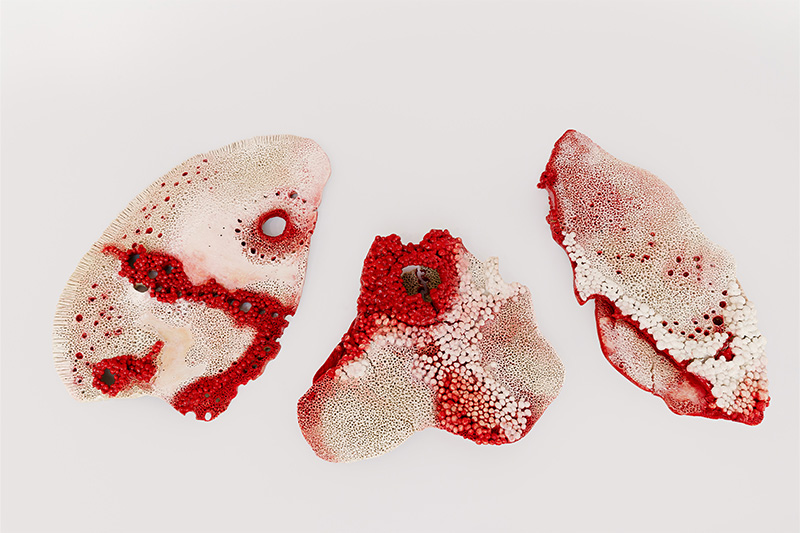
AMOGELANG MAEPA
My ancient red, 2026
Paper Clay
4.5 x 33 x 15 cm
6 x 21 x 23 cm
2.5 x 29 x 21 cm
My ancient red
I am always walking blood stained
I am all skin and nerves
I have no shelter
Where is your body?
Showing perfect nipple through your white shirt
Making that sound with the tip of your tongue
You can already smell the bitterness of my red
I want all your wrong places
To expose you to my masturbatory passions
In voodoo I will promise your name
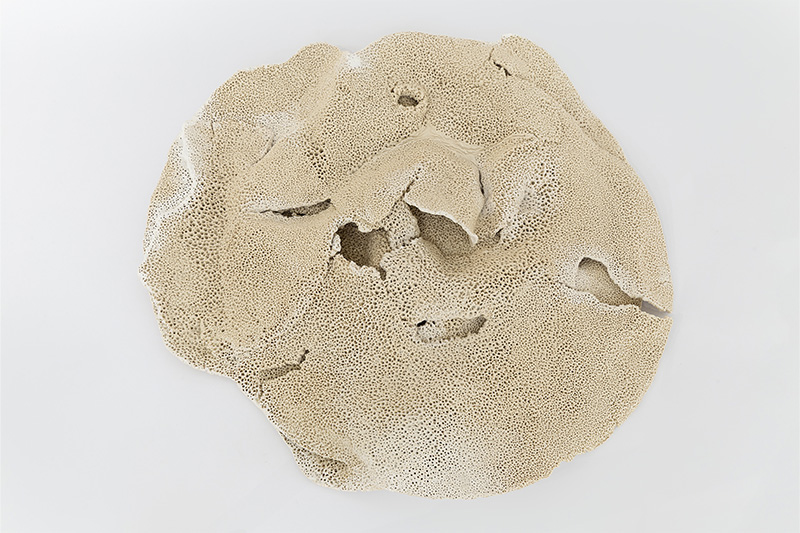
AMOGELANG MAEPA
Sin or no sin, 2026
Paper Clay
7 x 45 x 41 cm
Sin or no sin
I want you to bite the soft decay of my living thing
To turn my greed into need
White sheets heavy with salt stains
Summer season bathing and milky teeth
Rerouting your bloodstreams so you finally
Come back to me
I have stabbed you continuously only to resurrect you again
And again, and again and again and again and again
Only to keep stabbing you continuously
Until you are completely mine
Sin or no sin
You are always what I get back
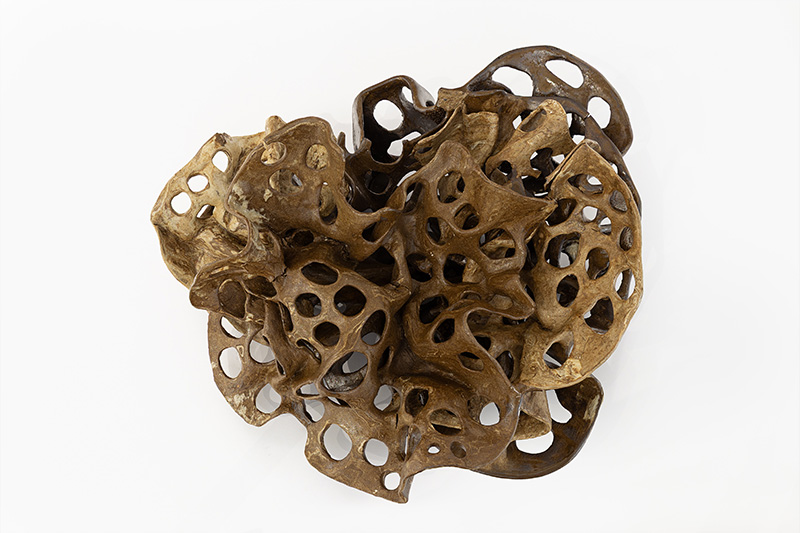
AMOGELANG MAEPA
I will know hunger, 2026
Paper Clay
19 x 36 x 36 cm
I will know hunger
With my tongue thickening and sticky skin
I will own your hunger
At my feet you eat and sleep
I am his luxury behaviour
I am not his place for rest
But you see, I have finally got my skin back!
This time I can choose which Father
I will lay down for
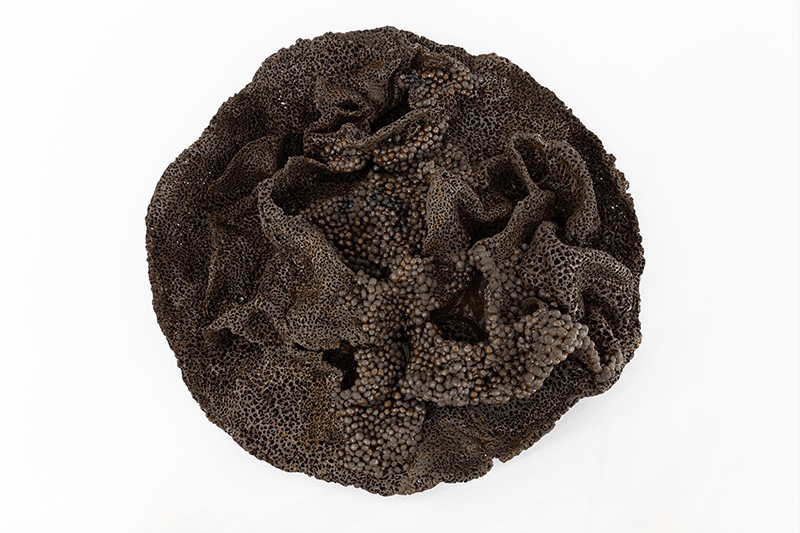
AMOGELANG MAEPA
There’s still a form of violence taking place here, 2026
Paper Clay
11 x 39 x 39 cm
There’s still a form of violence taking place here
I am primitive thinker, I am not avoiding tragedy
I want you to do bad things for me
I made you to find me
My sculptures hurt me; they grow teeth at night
But I must sit bloodless and keep feeding it
The sound is violent, but the doing is comforting
I am sorry that I am misbehaving
Fur genuine
I am his girl and I love the luxury
I have made this to honour you and assault you
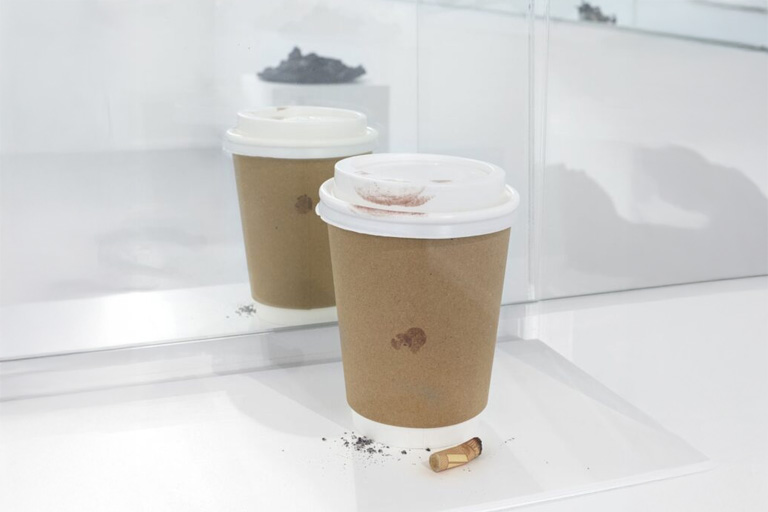
AMOGELANG MAEPA
Luxury behaviour, 2026
Disposable cup, cardboard sleeve, pigment stain, cigarette butt, ash
Curatorial intervention
47 x 26.5 x 16.5 cm
Unique
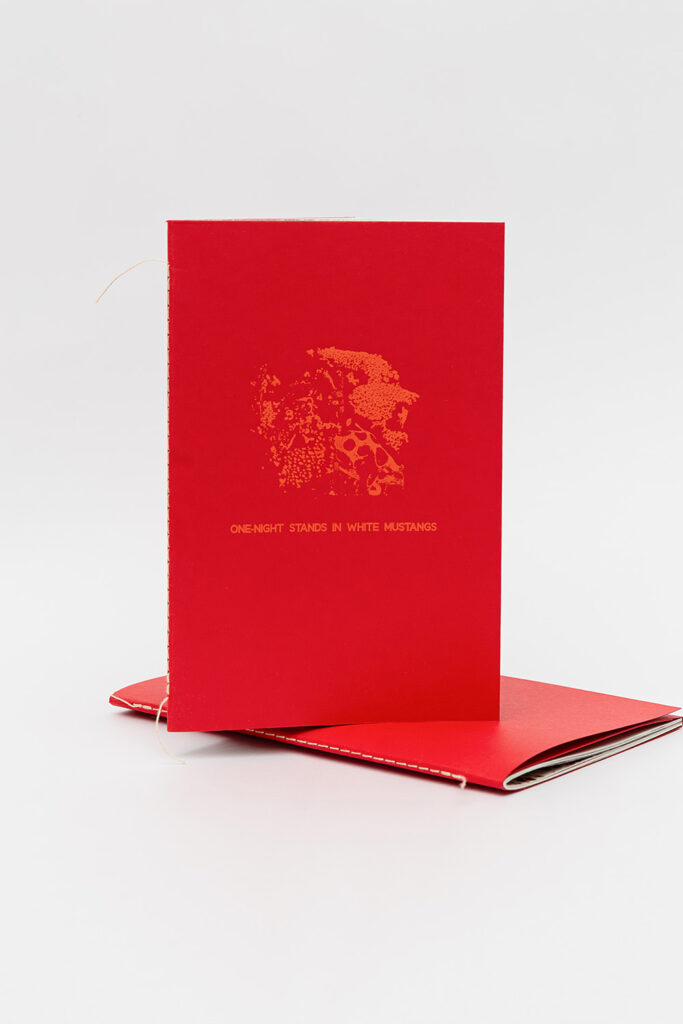
AMOGELANG MAEPA
One-night stands in white mustangs (edition 200), 2026
Center stitch binding
Cover: folia red 300gsm
Text: Stephen innocent white 120gsm
Center fold: getaway translucent 140gsm
Essay insert by Donavan Mynhardt: arena natural white 90gsm
21 x 14 x 0.5 cm