
HANNALIE TAUTE
MOTHER. MONSTER. STITCH.
Artist Bio
Taute completed a National Higher Diploma in Fine Art at PE Technikon (now Nelson Mandela University) in 2000. She held her debut solo exhibition, Siembamba – let’s play pretend, at João Ferreira Gallery in 2004, and has since exhibited widely across South Africa and internationally. Recent solo exhibitions include presentations at Oliewenhuis Museum, Bloemfontein (2025), MContemporary in Sydney, and Knysna Fine Art (2024).
Her work has been featured at major art fairs including Sydney Contemporary (2022, 2024, 2025), Positions Berlin (2022), AKAA Art Fair, Paris (2022), and Latitudes Art Fair with Candice Berman Gallery. She received the Kanna Award for Best Visual Art Production at the KKNK Arts Festival in 2014 for Rubber Ever After, and represented South Africa at the Rijswijk Textile Biennale in the Netherlands in 2017.
Her work is held in numerous private and public collections, including the UNISA Art Collection.
She lives and works in Riversdale, at the foot of the Sleeping Beauty mountain range in the Western Cape.
Hannalie Taute is represented by Berman Contemporary.

Curatorial Statement
A Monographic Exhibition by Hannalie Taute
Curated by Karolien van Zyl
In Mother. Monster. Stitch., the family portrait misbehaves.
Hannalie Taute pierces and re-stitches the rituals of womanhood – weddings, motherhood, composure – transforming them into something raw, tactile, and alive. Working with discarded rubber, thread, and vintage photographs, she turns the domestic archive inside out. Each puncture becomes thought; each stitch, a refusal to stay quiet.
Taute works as both archivist and trickster.
She raids the cupboards of domestic mythology – the wedding album, the family photograph, the “happy wife” – and rewires them with laughter and mischief. Through her hands, the grotesque becomes a form of wit, and repair turns to rebellion.
Here, the monstrous feminine isn’t horror but vitality – a language of becoming. Her figures laugh, unravel, and re-form; humour and horror share the same thread. The handmade resists the digital; the imperfect becomes proof of life.
Across the exhibition, the emotional pulse shifts from ritual to rebellion to repair. The home becomes a theatre of survival – every mask, every flower, every caption a negotiation between care and control.
Look closely: what you call monstrous may simply be the truth showing through.
In The Press
Exhibition Companion
HANNALIE TAUTE
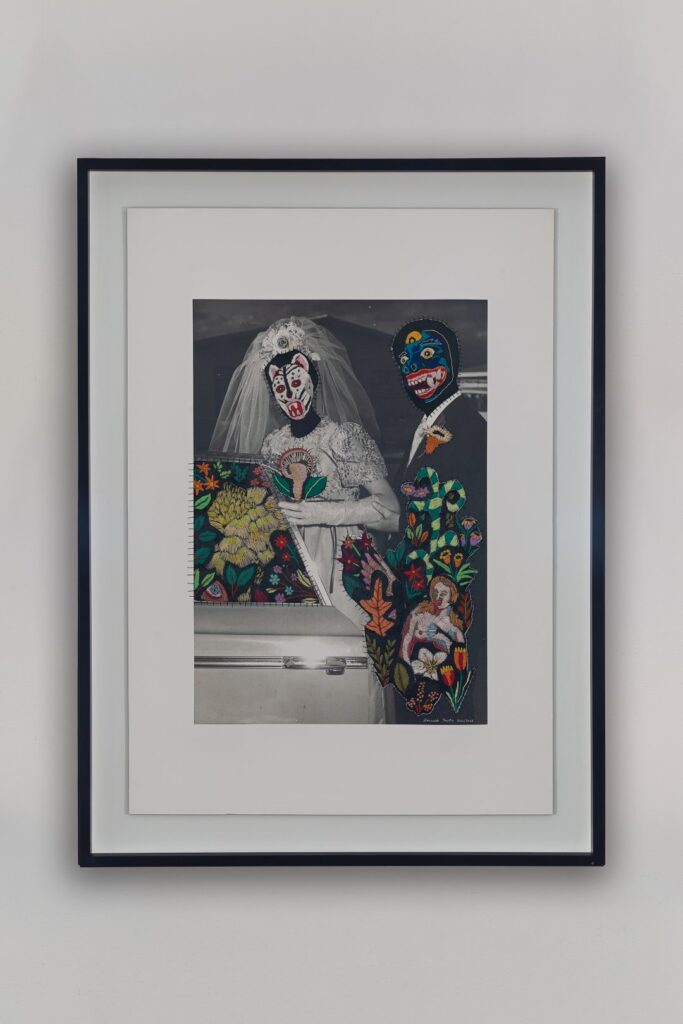
Prey (sic) for them, 2023
Archival print on board, thread, textile and rubber
120.5 x 85 cm
Framed 135 x 101 x 7 cm
The first photograph Hannalie Taute ever embroidered, a wedding portrait of her parents-in-law, marks the genesis of her stitched practice.
Drawn from her family archive, it transforms a private image into a negotiation between intimacy and inheritance.
Embroidery becomes genealogical repair: an act of care and friction that resists restoration, threading through the histories one has married into.
The title, Prey (sic) for them, captures the quiet tension beneath the surface, where devotion shades into appetite and affection coexists with authority.
Across these early works, the male figure carries a subtle dominance, while the women’s faces, reimagined through thread and mask, recover the vitality that composure once suppressed.
Prey (sic) for them turns devotion into appetite, prayer into hunger.
Artist Reflection
Artist Reflection Transcript
“This was the first photograph I ever embroidered: my parents-in-law on their wedding day.
I was curious to see what would happen if I stitched into something so personal.
Weddings can be sweet, but they can also be hungry.
I gave her a cat face – sharp, soft, impossible to tame – and him a grin that doesn’t quite fit.
As I stitched, the flowers kept growing, almost choking the photograph. I let them.
When it was finished, my son said, ‘The bride looks like his prey.’
That became the title. Prey (sic) for them.
It still feels right: love and hunger, side by side.”
HANNALIE TAUTE
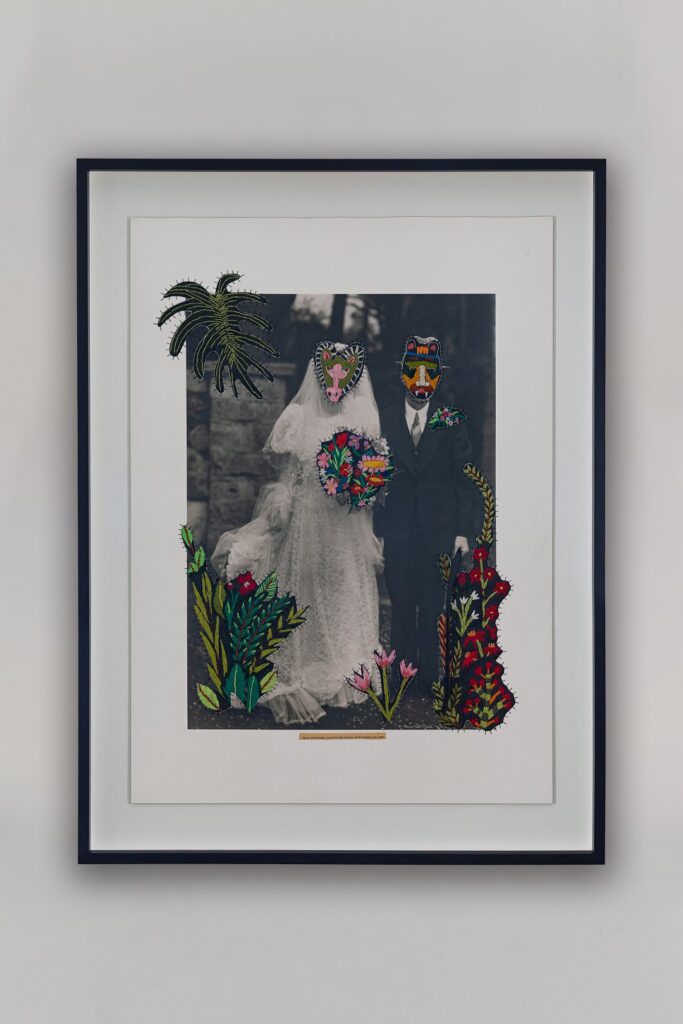
Jason and Medea loved by the people lived happily ever after, 2023
Archival print on board, thread and rubber
113.5 x 81cm
Framed 135 x 101 x 7 cm
The wedding portrait restages the myth of Jason and Medea – lovers whose story ends in betrayal and revenge.
The bride’s mask, embroidered as the Golden Fleece, transforms her from trophy to force. She becomes the object of desire turned the agent of consequence.
The groom’s whip, stitched into the image, shifts the scene from romance to ritual, from the performance of love to provocation.
Taute revisits the “Medea complex” with humour rather than tragedy, asking how love becomes a negotiation of appetite and control.
Here, repair is mutation: the image devours its own ideal.
Between parody and pathos, the feminine stops fearing the fallout of its own desire, emotion, and power: radiant and dangerous in the moment after the unravelling.
Artist Reflection
Artist Reflection Transcript
“I’ve always loved the story of Jason and Medea – how it begins like a fairytale and ends like a crime scene.
According to the myth, they were happy for a few years, until Jason decided he deserved better.
Medea took revenge, of course.
I was thinking about love as an exchange, a power game – who holds the prize, who pays the price.
In this photograph, I gave the bride the Golden Fleece – the thing everyone wants – and I added a whip for Jason.
Suddenly the whole scene changed.
It became part myth, part marriage therapy, part kink.
People call Medea a monster, a villain, a victim.
Maybe she’s all of them.
In my version, they stay together – satisfied, maybe, for now.
‘Happily ever after,’ as the story goes… right?”
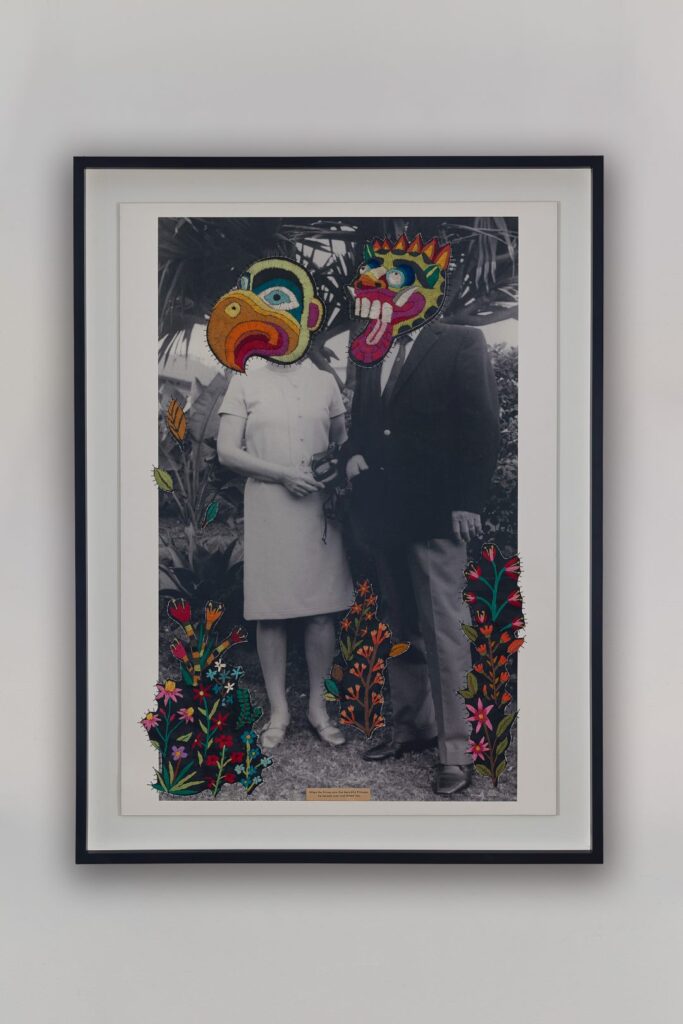
HANNALIE TAUTE
When the prince saw the beautiful princess, he leaned over and licked her, 2023
Archival print on board, thread and rubber
122 x 87 cm
Framed 135 x 1010 x 7 cm
Taken years after the wedding, this anniversary portrait restages the performance of romance.
The embroidered masks exaggerate the gestures of devotion until they verge on parody: desire becomes theatre, affection becomes appetite.
The title twists the fairytale into something physical and absurd.
To lick rather than kiss is to blur tenderness and consumption: a gesture too honest for sentimentality.
Here, love persists through awkward repetition, devotion replayed until it frays at the edges.
The work reflects on what remains of love once habit takes hold, when devotion is performed out of rhythm but still persists.
Here, repair is repetition: the image rehearses the myth of togetherness while revealing its seams. Between the ridiculous and the sincere, affection survives – strange, enduring, and a little untamed.
Artist Reflection
Artist Reflection Transcript
“This photograph was taken years after the wedding, an anniversary picture.
I liked how they’re still posing, still performing the same story.
The title makes me smile – He leaned over and licked her.
It’s not romantic, it’s awkward and real.
A lick is too close, too animal, but it’s also honest.
After a lifetime together, maybe that’s what love looks like, a mix of habit and hunger.
The masks exaggerate it, turn it into a kind of pantomime.
It’s tender and ridiculous at the same time.
Maybe the fairy tale doesn’t end.
It just gets stranger.”
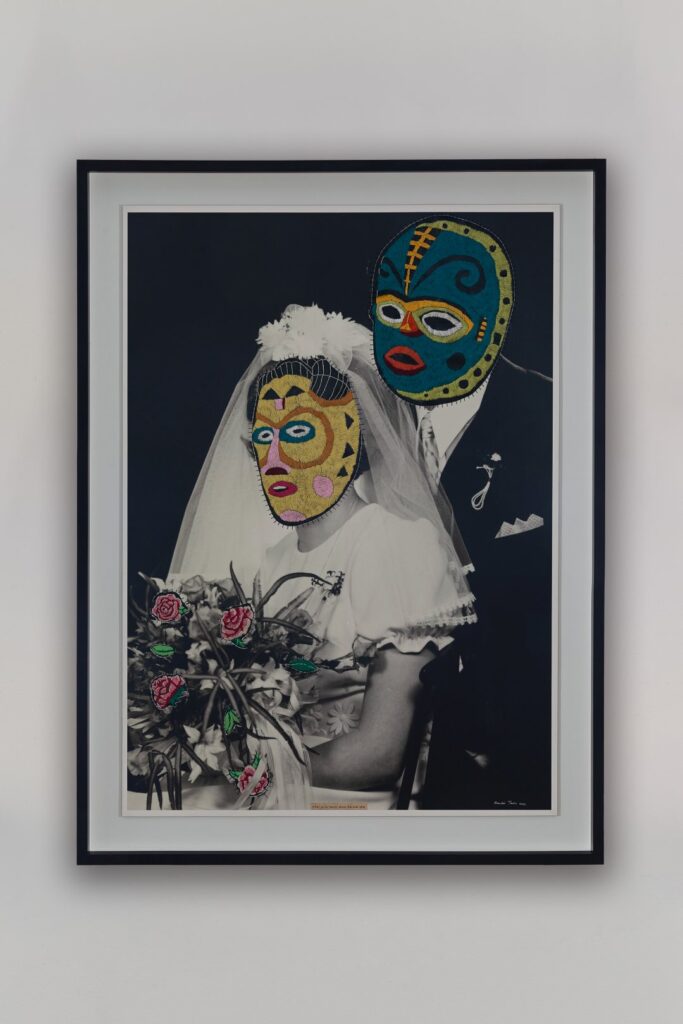
HANNALIE TAUTE
What is so happy about the ever after, 2022
Archival print on board, thread and rubber
122 x 85 cm
Framed 135 x 101 x 7cm
A wedding portrait insists on happiness: the perfect ending, the sealed promise.
But Taute’s embroidered masks betray fatigue; their bright patterns are stitched too tightly over still faces.
The bouquet wilts in its own colour; the thread trembles where the photograph holds its breath.
This is not irony, but aftermath, the quiet that follows performance.
Here, repair becomes endurance: the work of staying stitched together when the story is over.
The question isn’t bitter; it’s tender.
What if “ever after” is simply the ongoing act of mending?
Artist Reflection
Artist Reflection Transcript
“I kept looking at this photograph and wondering what exactly are they celebrating?
The couple looks complete, but there’s tension in how they hold themselves, like they’re holding their breath.
I kept thinking about that moment after the picture is taken – when the room goes quiet again.
I stitched the masks to hold that silence, not to hide them, but to show how heavy it is to stay perfect.
I don’t think the question, What is so happy about the ever after?, is bitter.
It’s just honest.
Maybe the “ever after” isn’t the ending we imagine.
Maybe it’s the daily act of keeping the stitch from unravelling.”
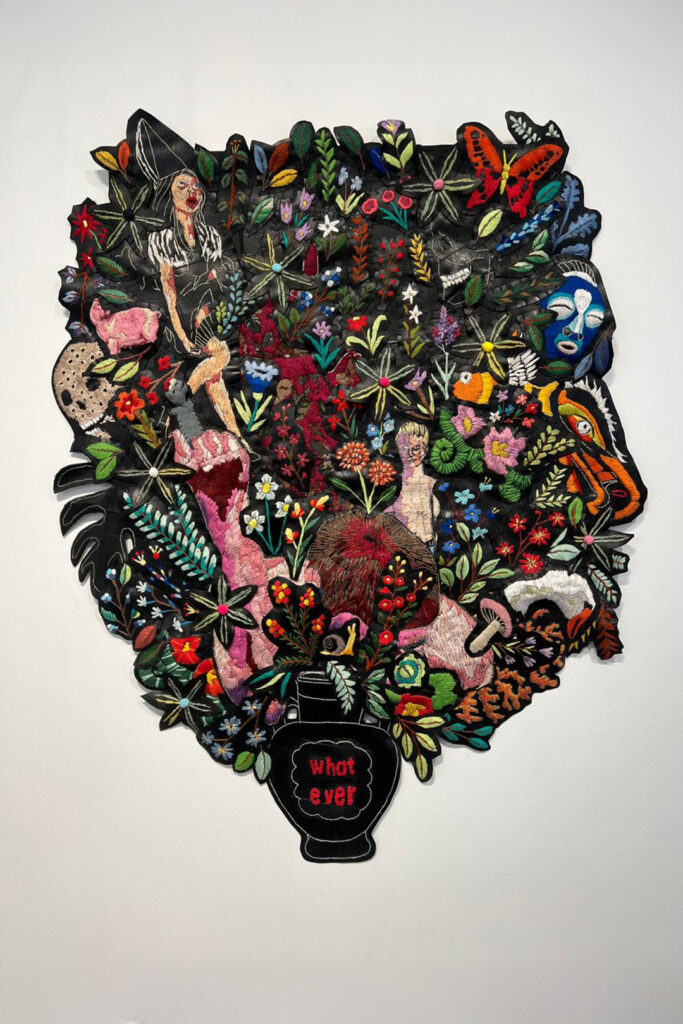
HANNALIE TAUTE
Whatever, 2025
Thread, found textiles and rubber
118 x 94 cm
A bouquet for the end of the story.
Whatever gathers the fragments –flowers, masks, limbs – into a tangled bloom that refuses order or sentiment.
The embroidered abundance suggests celebration, yet the single word stitched at its base deflates it, turning beauty into rebellion.
Here, the monstrous feminine blossoms as excess – too much colour, too much feeling, too much life.
The flowers overrun the figures that once arranged them; desire and decay share the same thread.
The title’s shrug, Whatever, is not indifference but endurance, a weary, wry survival after the fairytale collapses.
What remains is not closure but bloom, stubborn, stitched, and alive
Artist Reflection
Artist Reflection Transcript
“People think of flowers as polite, but I’ve always found them a bit aggressive.
They crowd, they push, they take up space.
This one started as a bouquet and turned into a jungle – hands, faces, fragments.
I stitched the word whatever at the bottom because I liked how it cancels the sentiment.
It’s not ‘I don’t care,’ it’s more like, ‘I’ve survived enough to keep laughing.’
Maybe that’s what this bouquet is: a wild shrug, stitched out of everything that came before.”
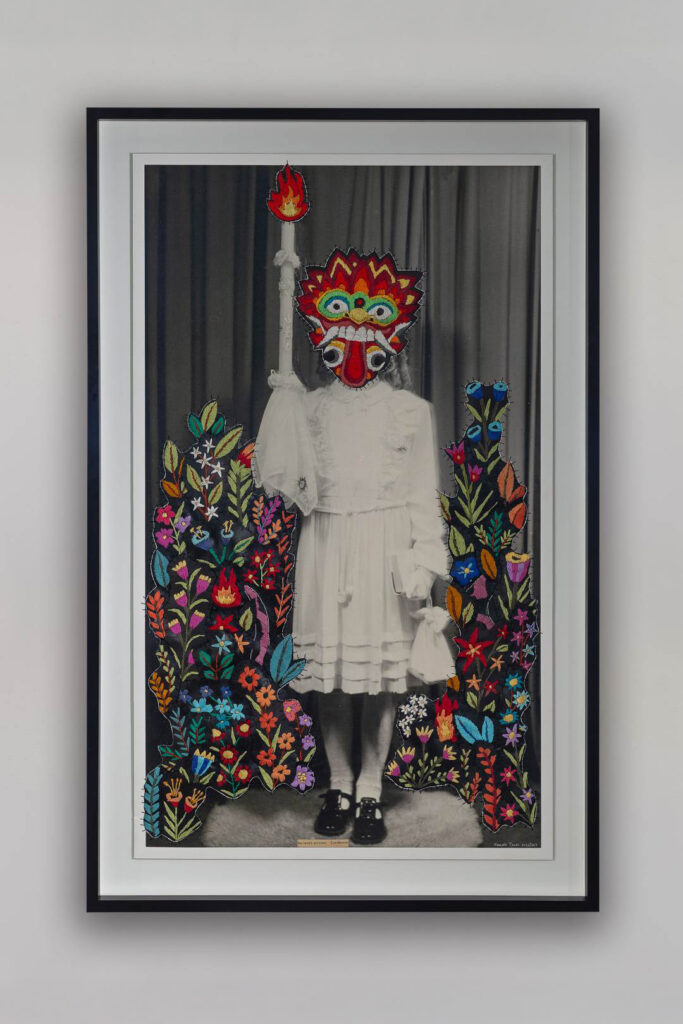
HANNALIE TAUTE
The Lovely Princess Candlewick, 2022/2023
Archival print on board thread and rubber
120 x 71.5 cm
Framed 132 x 83.5 x 4 cm
Part child, part effigy, The Lovely Princess Candlewick marks the first spark of rebellion.
Dressed in white and holding her ceremonial candle, she stands as if for a sacred portrait.
But the embroidered mask burns brighter than the flame, transforming obedience into initiation.
The title recalls softness: fabric, fairy tales, and the manners of good.
Around her, flowers surge upward, an omen of what’s to come.
On the reverse of this wall, Whatever shows that same fire in full bloom.
Together, the two works trace the passage from restraint to excess, from the flicker of awakening to the wild insistence of becoming.
Artist Reflection
Artist Reflection Transcript
“She stood so still, like she’d been told this moment was important.
The candle looked pure, but I kept wondering what would happen if the light escaped.
The mask became its own flame – part dragon, part celebration.
I called her The Lovely Princess Candlewick because the name sounded soft, too soft for the creature she became.
Maybe that’s what growing up feels like: being stitched into a role, then setting it alight.”
The Good Wife Manual
A 2025 Series by Hannalie Taute
In The Good Wife Manual, Taute slides her domestic satire from the polite surface of the home into its emotional underbelly.
The wives aren’t performing femininity; they’re testing the seams of it. They eat, drink, sigh, stare, cope. Each gesture feels faintly choreographed, like a ritual repeated once too often: half obedience, half revolt.
Thread and rubber become more than materials; they act like forensic tools, tracing where expectation rubs against reality. The captions, part confession and part cliché, echo the voices of women’s magazines and kitchen-table wisdom, exposing how intimacy is policed through performance.
Across the series, the mood flickers. A joke turns sharp, a gesture sags, a bright bloom feels like its trying too hard. Taute isn’t offering instructions; she’s showing the aftermath of them.
The Good Wife Manual becomes a handbook of contradictions: a catalogue of small coping strategies, private rebellions, and the strange humour that survives inside the everyday feminine.
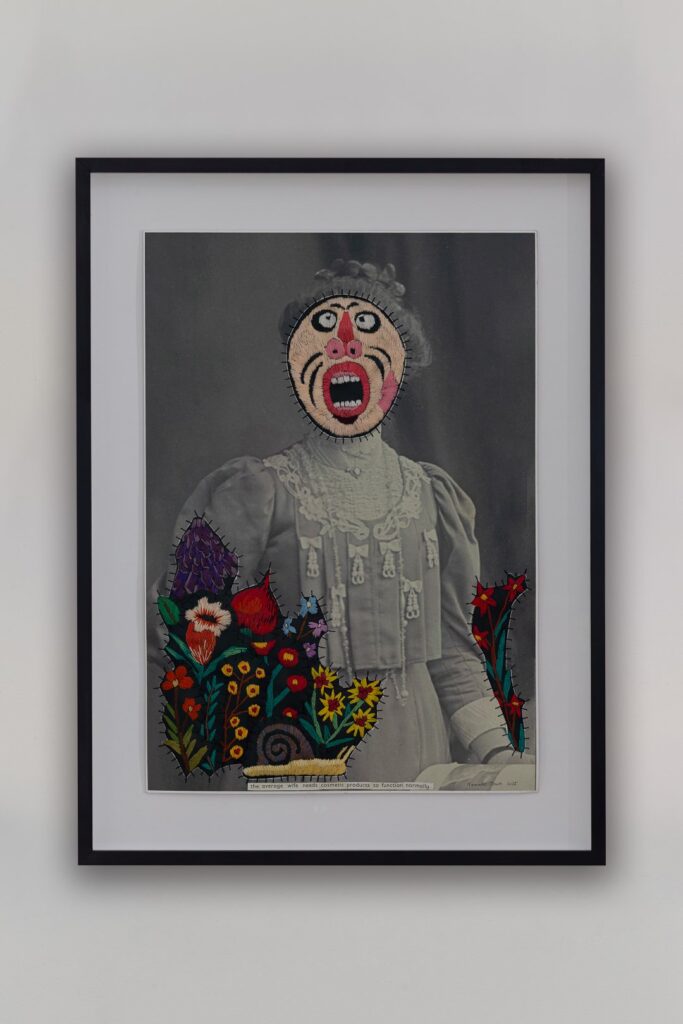
HANNALIE TAUTE
The average wife needs cosmetic products to function normally, 2025
Archival print on board, thread and rubber
59 x 42 cm
Framed 74 x 56 x 3.5 cm
Artist Reflection
Artist Reflection Transcript
“I kept thinking about how many products it takes to be called normal.
Creams, colours, little fixes for the face – all that effort just to look like yourself.
This woman already looked perfect in the old photograph, but I gave her a new face: loud, pink, impossible to ignore.
She’s smiling and screaming at the same time.
The flowers started to spread like chemicals, bright and toxic.
Maybe she’s not average at all. Maybe she’s what happens when average finally snaps.”
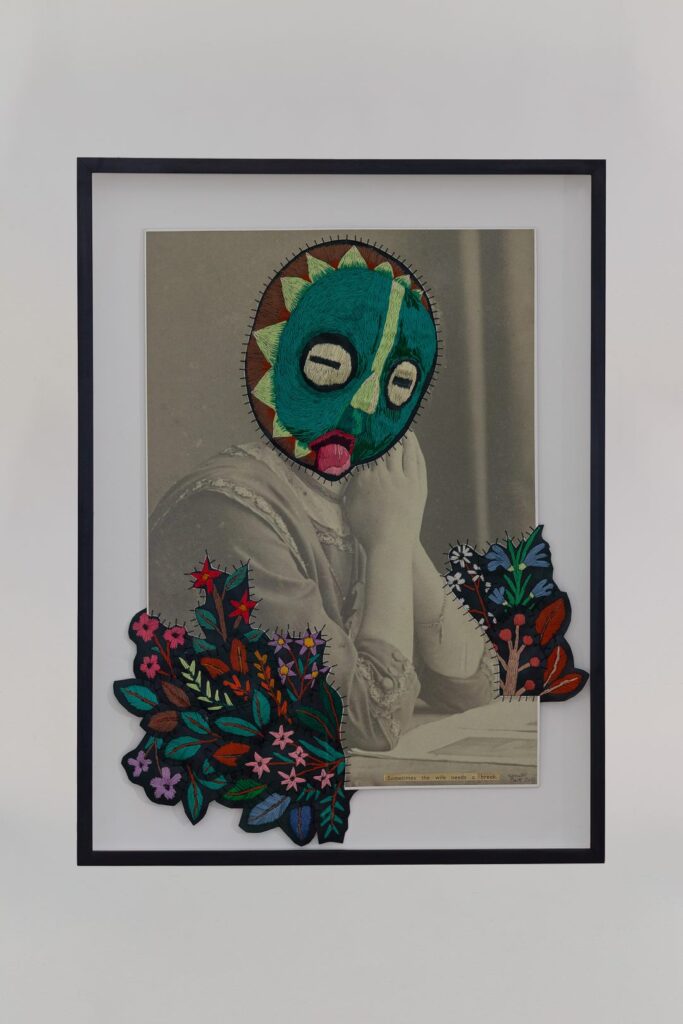
HANNALIE TAUTE
Sometimes the wife needs a break, 2025
Archival print on board, thread and rubber
65 x 51 cm
Framed 74 x 56 x 3.5 cm
Artist Reflection
Artist Reflection Transcript
“I think of this one as her nap, or maybe her escape.
The old photo felt so quiet already, I didn’t want to wake her.
I stitched the mask in slow greens, like breath.
Everyone says wives need a break, but what they mean is: take a breath, then keep going.
I wanted her to actually stop.
Just for a moment, she doesn’t have to perform anything.”
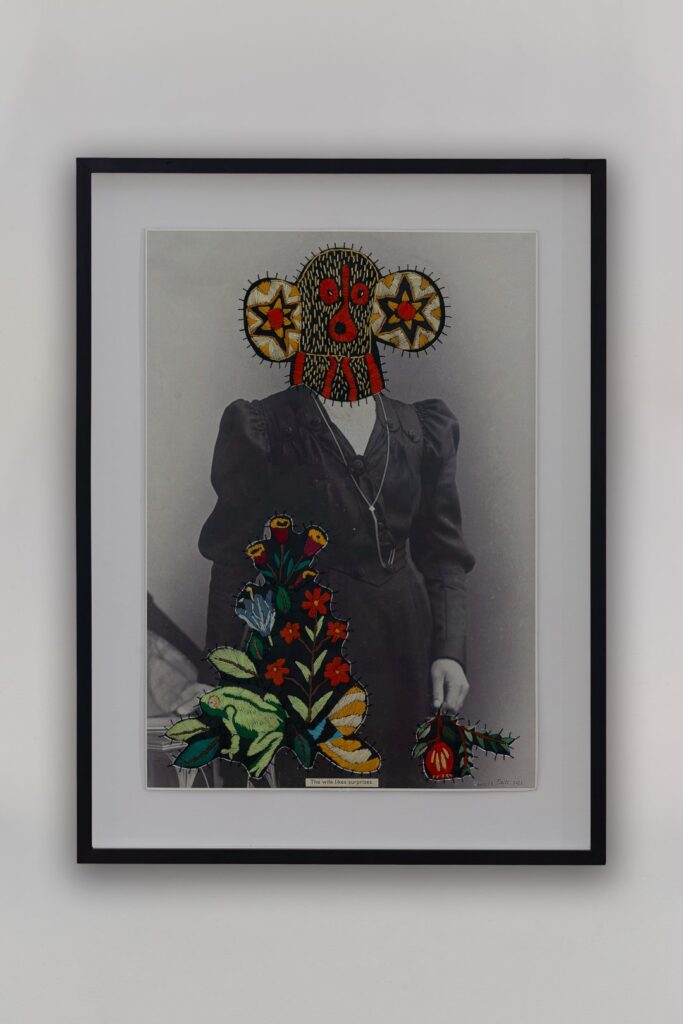
HANNALIE TAUTE
The wife likes surprises, 2025
Archival print on board, thread and rubber
59 x 41.5 cm
Framed 74 x 56 x 3.5 cm
Artist Reflection
Artist Reflection Transcript
“I liked the title because it sounds innocent: The Wife Likes Surprises.
But I also thought, what kind of surprises?
Maybe she’s done pretending to be shocked; maybe she’s the one doing the surprising now.
The face just came out that way – wild, funny, too much.
Sometimes when I’m stitching, it feels like the thread has its own sense of humour.
I don’t plan it; it just happens, and then I laugh, and it’s perfect.”
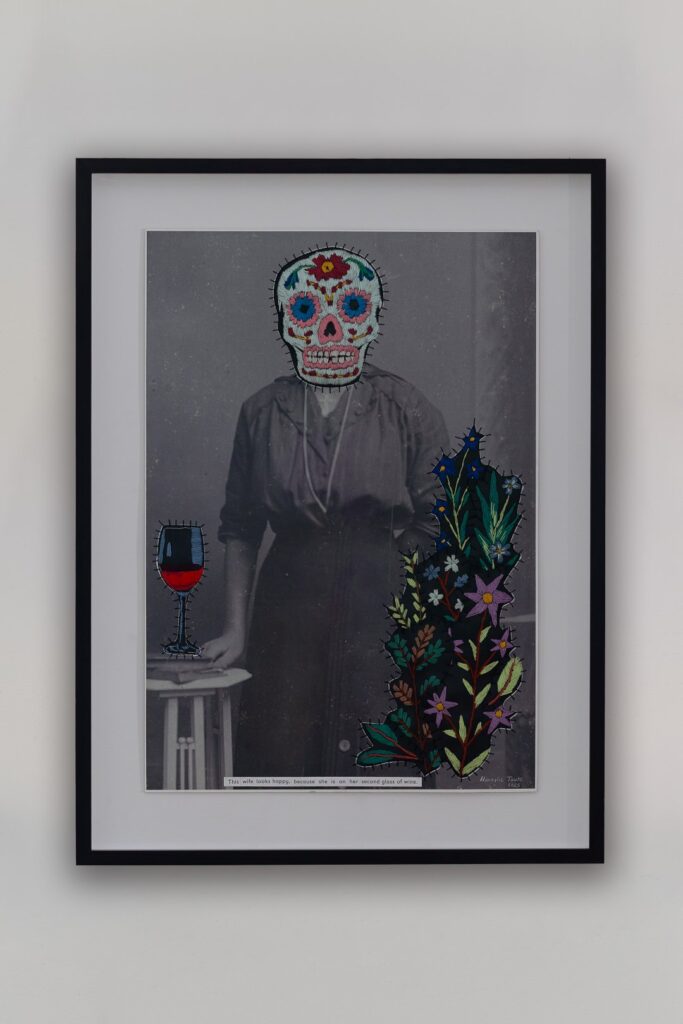
HANNALIE TAUTE
This wife looks happy because she is on her second glass of wine, 2025
Archival print on board, thread and rubber
59 x 41.5 cm
Framed 74 x 56 x 3.5 cm
Artist Reflection
Artist Reflection Transcript
“Her face became a skull, but not a scary one.
I stitched it in bright, candy colours, somewhere between a sugar skull and a party decoration.
This wife looks happy because she’s on her second glass of wine. I built the title from little word scraps, like something you’d see in a lifestyle column or overhear at a braai. It’s funny, but also a bit heartbreaking.
The quiet, habitual ways women manage survival and composure.
Mommy’s little helper, that second glass, just enough to keep the ‘happy wife’ going for one more day.”
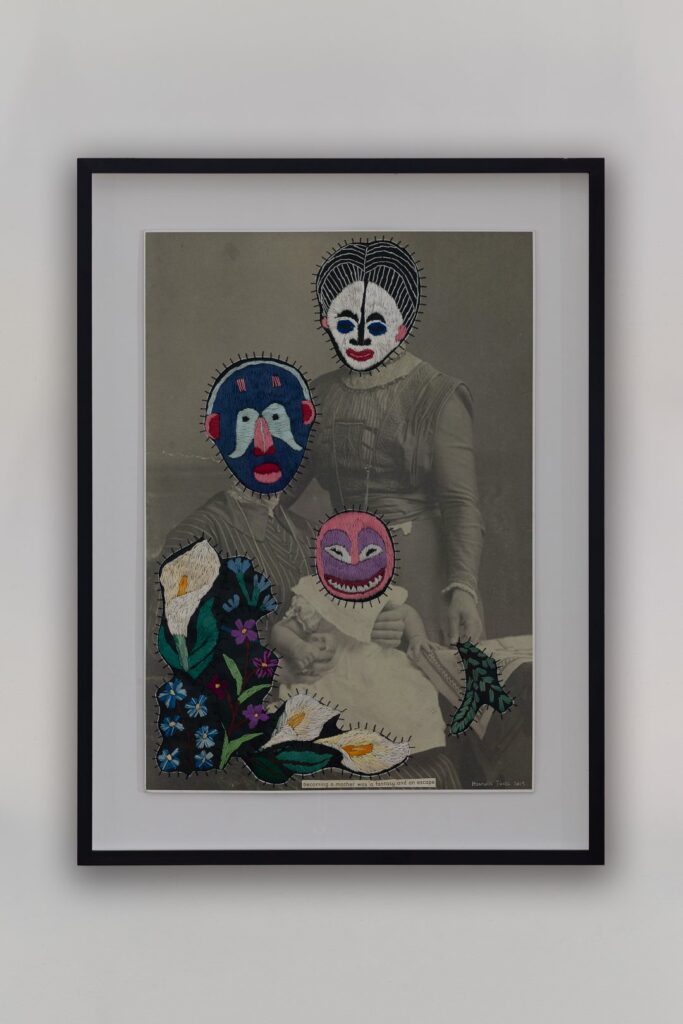
HANNALIE TAUTE
Becoming a mother was a fantasy and an escape, 2025
Archival print on board, thread and rubber
59 x 41.5 cm
Framed 74 x 56 x 3.5 cm
Artist Reflection
Artist Reflection Transcript
“I’ve always been fascinated by how motherhood gets romanticised – all softness and devotion.
For me, it was never just that. It’s messy, it’s consuming, it’s beautiful and brutal.
When I found this photograph, I thought of all the mothers who disappear inside that role.
The masks aren’t meant to hide them – they’re what’s left when the pretending stops.
The title? That’s my truth too. It was both fantasy and escape.”
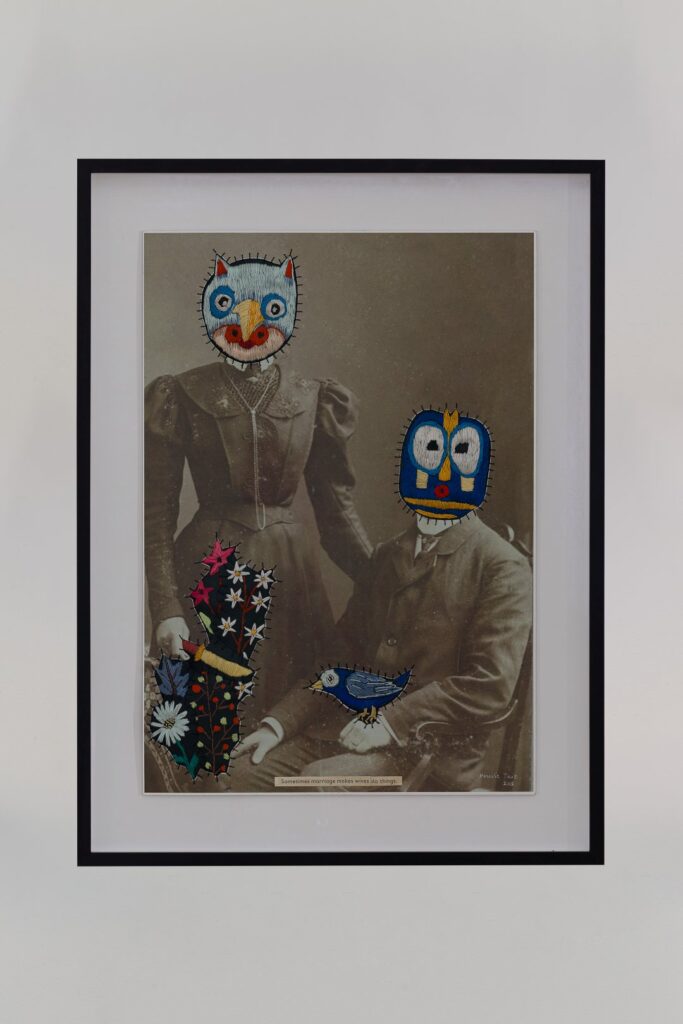
HANNALIE TAUTE
Sometimes marriage makes wives do things, 2025
Archival print on board, thread and rubber
59 x 41.5 cm
Framed 74 x 56 x 3.5 cm
Artist Reflection
Artist Reflection Transcript
“She came together slowly – the wife, the husband, the embroidery.
I kept thinking about the quiet ways frustration builds up, how politeness becomes habit.
The knife appeared almost on its own – a small rebellion, a release.
It’s not about harm; it’s about balance.
The title, Sometimes marriage makes wives do things – is really about what happens when you’ve been good for too long.”
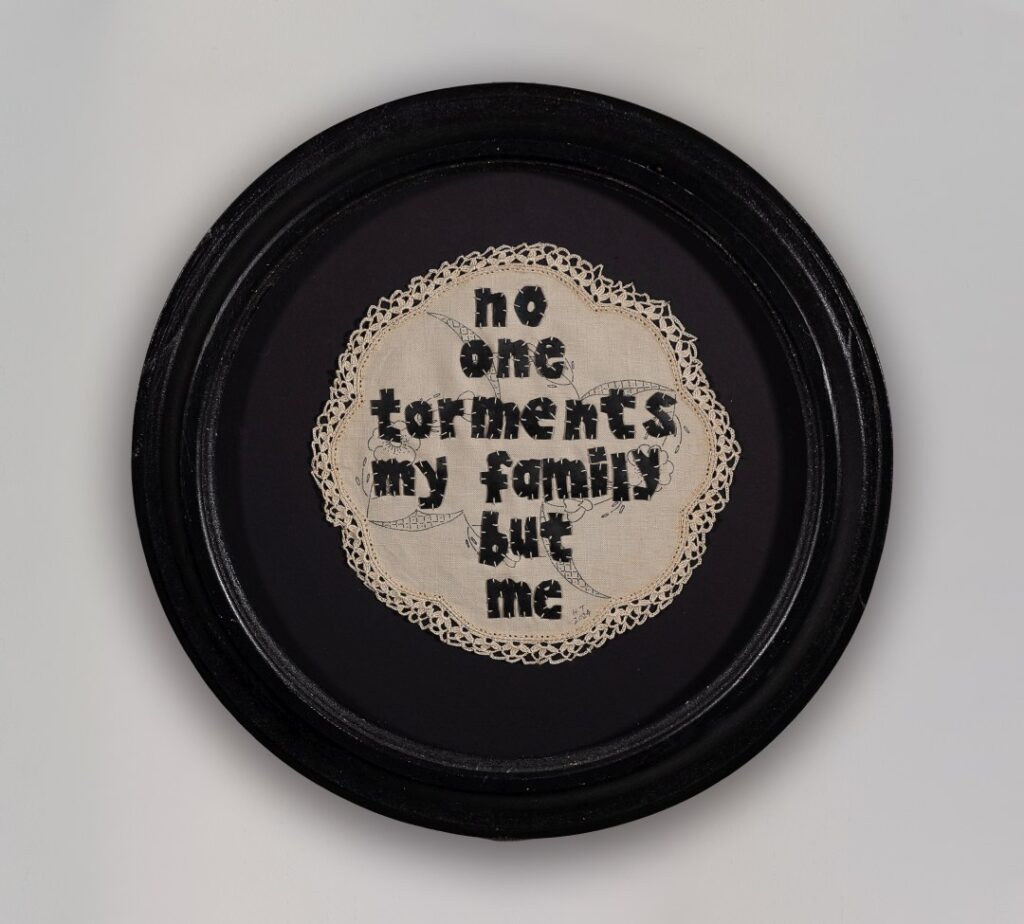
HANNALIE TAUTE
No one torments my family but me, 2024
Archival print on board, thread, textile and rubber
35 x 35 cm
Framed 45 x 45 x4cm
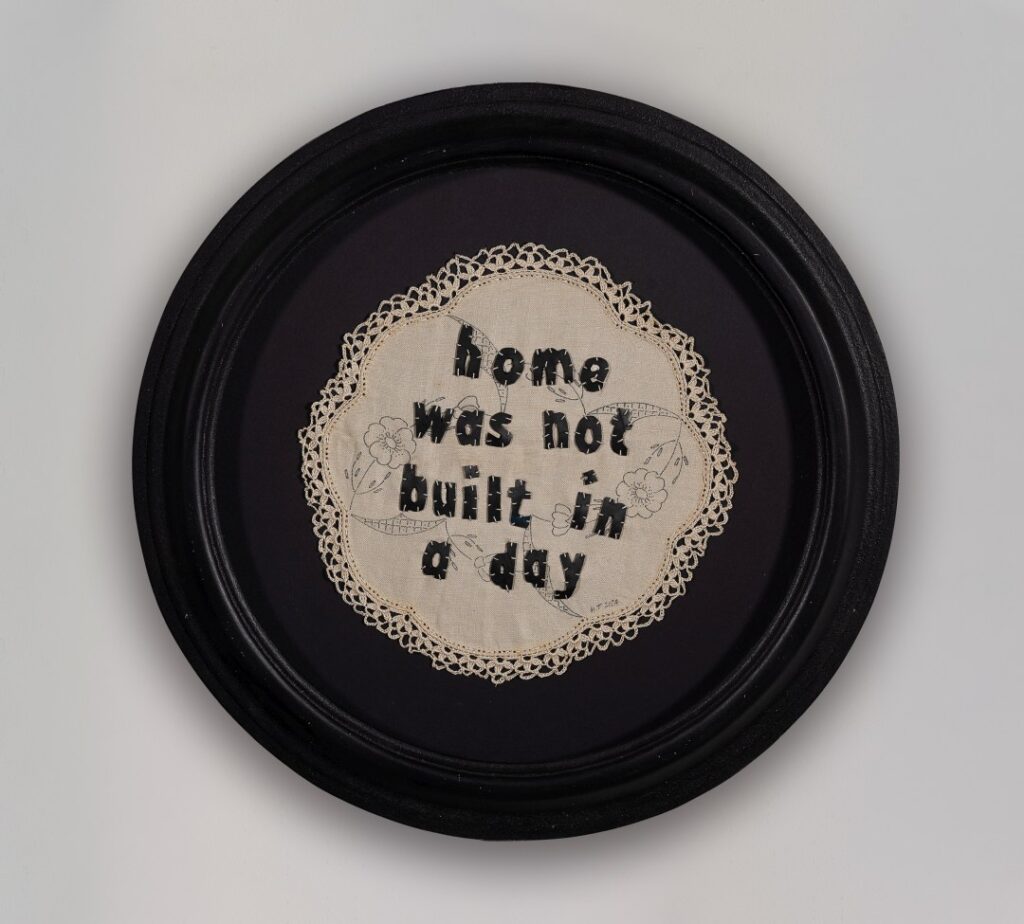
HANNALIE TAUTE
Home was not built in a day, 2024
Archival print on board, thread, textile and rubber
35 x 35 cm
Framed 45 x 45 x4cm
Household Masquerade
In these group compositions, Taute moves from the inner weather of the individual – the wife, the bride, the girl – to the collective theatre of family, where identity becomes something rehearsed rather than felt.
The focus shifts outward: from the lone figure wrestling with respectability to the family as the system that produces it.
Here, the portrait is no longer evidence; it’s choreography.
Obedience, hierarchy, and belonging are practiced side by side, one generation teaching the next how to behave.
Each image functions as a collective mask, a social organism stitched together by both bloodline and performance.
Smiles align. Hands settle into familiar poses.
The ritual of sameness becomes its own quiet performance, binding everyone into a single, coherent fiction.
Within this system, the monstrous becomes communal rather than personal.
Not a flaw in one woman, but a shared inheritance: the tension, the silence, the emotional labour that circulates through families like an heirloom no one remembers choosing.
And as the masks multiply, something shifts.
The performance becomes visible.
Normality, so carefully posed, begins to look unfamiliar, even a little uncanny. The family portrait no longer preserves memory; it reveals the cost of maintaining it.
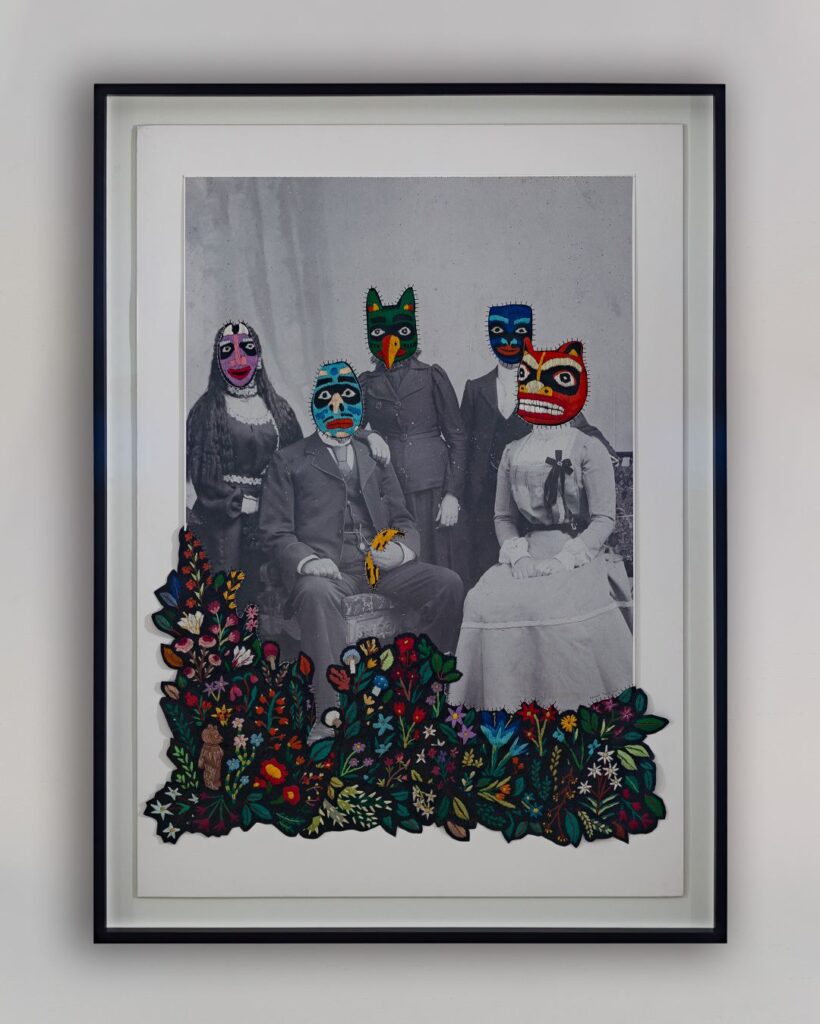
HANNALIE TAUTE
Gam se geslag, 2025
Archival print on board, thread and rubber
142.5 x 102 cm
Framed 156 x 116 x 7 cm
Gam se geslag takes its title from a phrase once used to mark racial “otherness.”
Drawn from the Biblical story of Ham, Noah’s son, whose supposed curse was twisted for centuries to justify colonial hierarchies.
In Afrikaner culture, “Gam” became shorthand for impurity, a slur disguised as scripture.
Taute reclaims the phrase and turns it inward, stitching over the respectable family portrait: the image of white genealogy and moral order, now disrupted by a riot of masks and flora.
The lineage of “purity” becomes a carnival of hybridity.
Each embroidered face is grotesque and vivid, neither cursed nor blessed, but defiantly alive.
The work exposes the absurdity of inherited pride, showing how easily ancestry slips into mythology, and mythology into violence.
Through humour and horror, Gam se geslag collapses the distance between self and other, ancestor and monster. The so-called “pure bloodline” reveals itself as a patchwork: stitched, stained, and human.
Artist Reflection
Artist Reflection Transcript
“I grew up hearing that phrase – Gam se geslag.
It’s old, and ugly, and meant to separate people.
I wanted to turn it back on itself.
So here’s this very proper family, sitting perfectly still, waiting to be remembered.
I gave them masks – animal, human, in between.
I made the flowers too much, too bright, too alive.
Suddenly the ‘pure’ family becomes this strange, mixed garden.
I like that it laughs at the idea of lineage: who belongs, who doesn’t.
In the end, we’re all stitched from the same mess.”
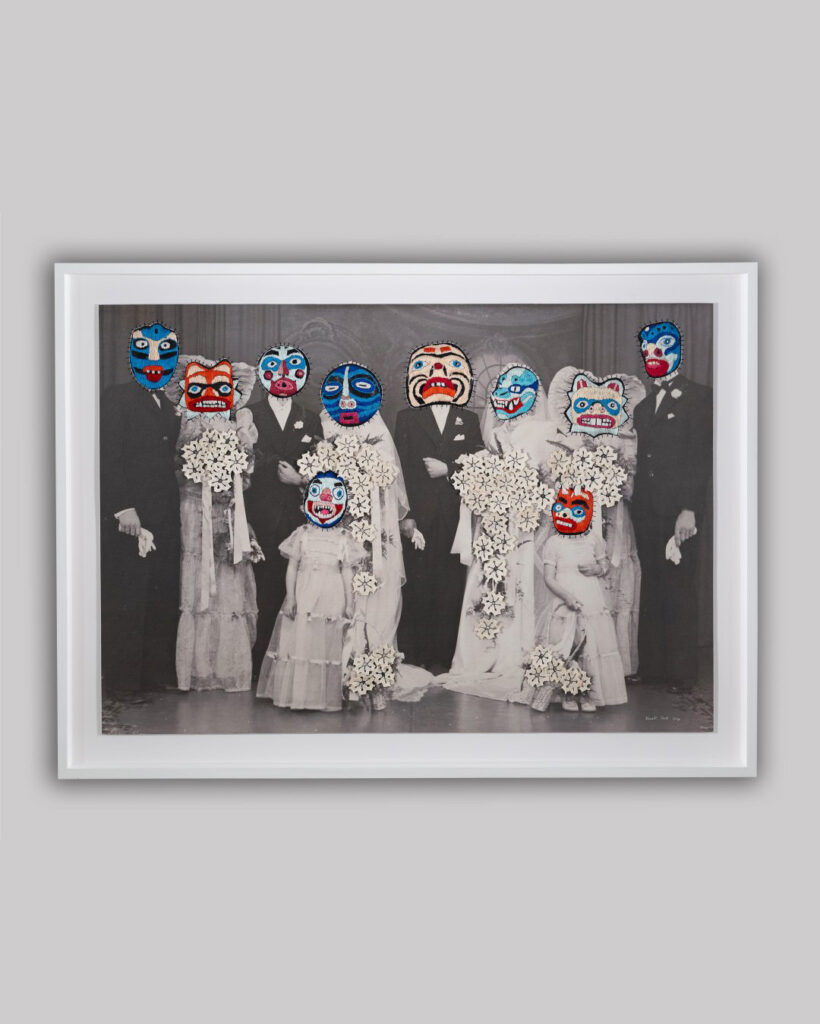
HANNALIE TAUTE
Fees van die Aangenaaides, 2024
Archival print on board, thread, textile and rubber
85 x 120 cm
Framed 97 x 132 x 7 cm
Fees van die Aangenaaides turns the most sacrosanct image of respectability – the wedding portrait – into a carnival of masquerade. The title plays on the idea of those “stitched-on” rather than “invited,” suggesting a party no one truly asked to join.
Every participant wears an embroidered mask, their smiles stretched too wide, their eyes fixed in ecstatic unease.
The work exposes the tension beneath social ritual: the way belonging demands performance, how joy must sometimes be rehearsed.
It’s both comedy and haunting, a portrait of what happens when the photograph, meant to preserve purity, becomes a site of contamination and play.
Here, the monstrous is not an intruder but the most honest guest at the celebration, the part of the self that refuses to stay quiet, even during the toast.
Artist Reflection
Artist Reflection Transcript
“This photo already looked like a theatre set – everyone smiling just right, holding still.
I thought, what if I turned it into the party it was pretending to be?
The masks came one by one – laughing, screaming, showing too many teeth.
The flowers started to take over; they always do.
The title means something like ‘the feast of the stitched-on ones’.
I liked the idea that not everyone in the picture belongs, that we’re all just trying to keep up with the performance.
It’s funny and a little haunted, a family portrait that finally admits how much effort it takes to look happy.”
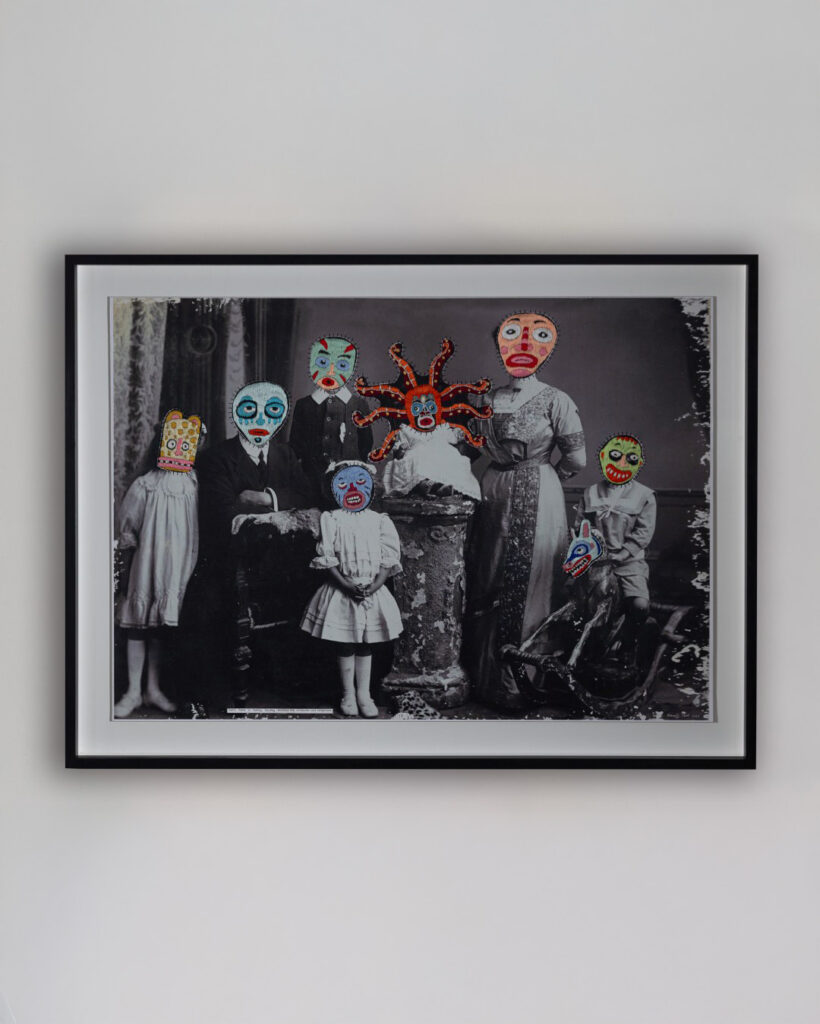
HANNALIE TAUTE
Lets have a family Sunday without the computer or the telephone, 2025
Archival print on board, thread and rubber
83.5 x 118.5 cm
Framed 101 x 135 x 7 cm
Let’s Have a Family Sunday Without the Computer or Telephone begins like a plea for reconnection, the nostalgic fantasy of togetherness before technology. But Taute’s reimagined family portrait suggests that disconnection is nothing new.
Each figure’s embroidered mask exaggerates an emotion too large to contain: panic, boredom, hysteria, resignation. At the centre, the “child” sprouts Medusa-like threads, the monstrous offspring of repression and expectation.
The work transforms a scene of domestic virtue into a psychic landscape, where the desire for unity collides with the claustrophobia of belonging.
By removing digital devices, the artist reveals that the real machinery of distance lies elsewhere — in roles, rituals, and silence.
The embroidery hums with the noise beneath the calm, the static between generations.
Taute’s humour cuts close to horror: it’s not the screens that isolate us, but the performance of perfection we keep stitching into every frame.
Artist Reflection
Artist Reflection Transcript
“People always say we should spend more time together, no phones, no distractions.
I thought, fine, let’s see what that looks like.
I found this old family photo, everyone standing so politely, and gave them masks that said what their faces wouldn’t.
The mother’s calm, the kids are about to scream, and the thing in the middle – well, even I’m not sure what it’s become.
Without the screens, there’s nothing to scroll, just the same faces, waiting for someone to blink first.”
Trickster Objects
Where the stitched photographs negotiate inheritance and performance, the balloons slip into another register entirely: emotion made volatile.
Each one is a small pressure chamber – stitched, bruised, punctured, daring the viewer to expect levity and then denying it. A balloon should be festive, weightless, harmless.
Taute’s are none of those things.
They are armoured, wary, and a little too knowing.
They are trickster objects: they bend the rules of the domestic world the exhibition has built, turning sweetness into unease and humour into incision. They hold the emotional residue of the stitched archive – irritation, fear, fantasy, defiance – all the feelings that cannot fit inside the family portrait.
If the brides reveal what is endured,
and the families reveal what is performed,
the balloons reveal what the body stores.
They are the exhibition’s unfiltered interior monologue – the side-eye, the swallowed retort, the joke that cuts because it carries truth.
Here, the monstrous is no longer a face but a pressure:
a quiet rebellion inflating under the surface until it demands shape.
Artist Reflection Transcript
“People think of balloons as light and cheerful.
But they’re actually tiny containers of pressure – just like us.
I started stitching into them because I liked how fragile they are.
One wrong move and they pop.
Each one became an emotion I didn’t have words for yet –
fear, irritation, boredom, hope, that feeling of being ‘all blown up.’
They’re funny, but not harmless.
Maybe that’s why I like them.
They don’t pretend to be strong.
They just hold it together… for as long as they can.”
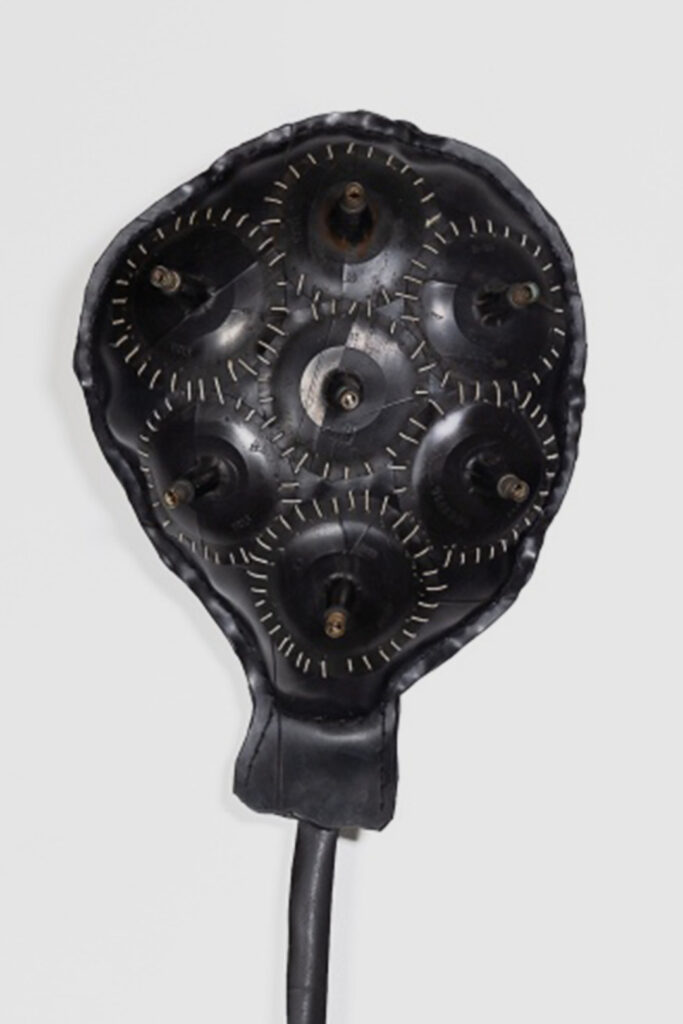
HANNALIE TAUTE
All blown up, 2025
Polyester fibre filling, thread and rubber
103 x 23 x 15cm
Artist Reflection
Artist Reflection Transcript
“That feeling when you’re smiling but one more thing will make you explode.
I stitched this one when I was tired of being polite.”
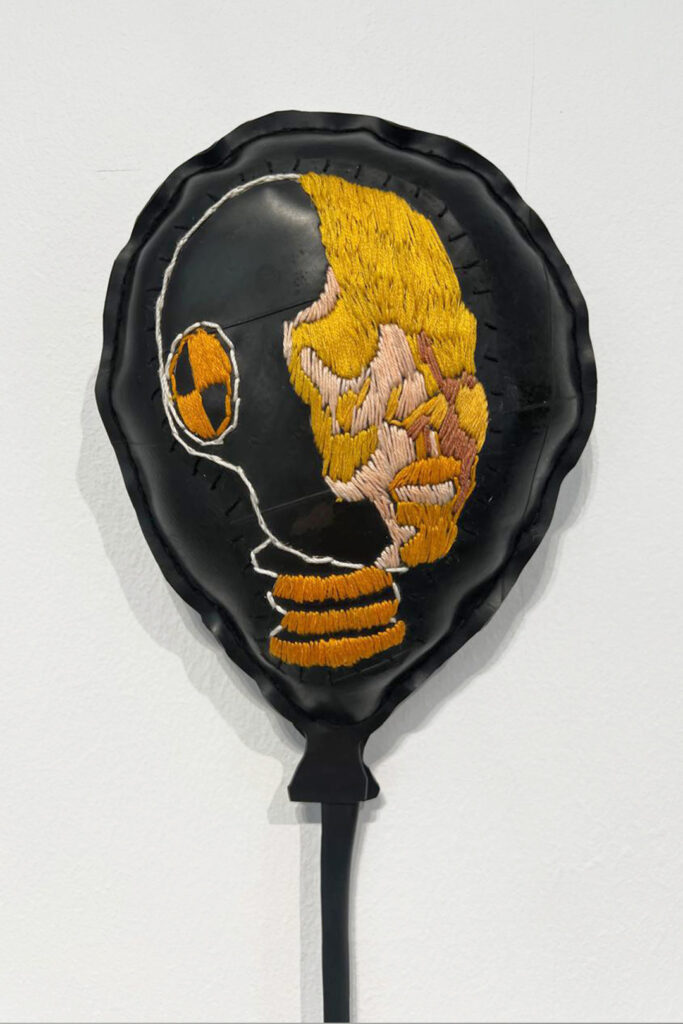
HANNALIE TAUTE
Crash Test, 2025
Polyester fibre filling, thread and rubber
109 x 19 x 6cm
Artist Reflection
Artist Reflection Transcript
“Sometimes life feels like an experiment someone forgot to supervise.
This balloon is for the days when you brace for impact.”
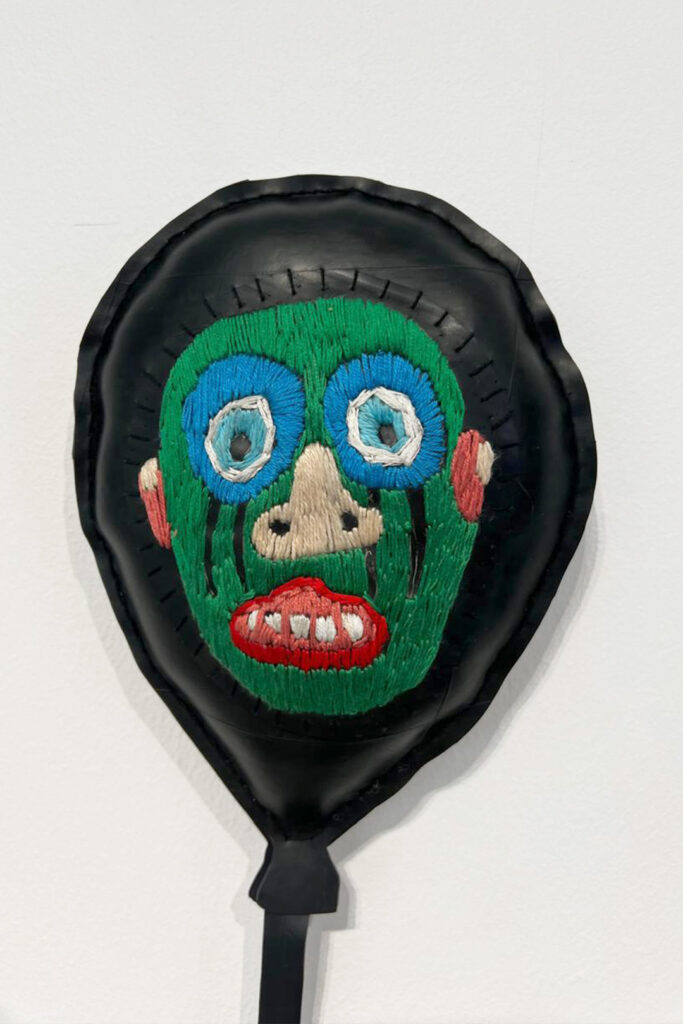
HANNALIE TAUTE
Fear of heights, 2025
Polyester fibre filling, thread and rubber
110 x 19 x 5cm
Artist Reflection
Artist Reflection Transcript
“I’ve always liked that fear can feel physical – a lift, a drop.
This one is that wobbly feeling behind the ribs.”
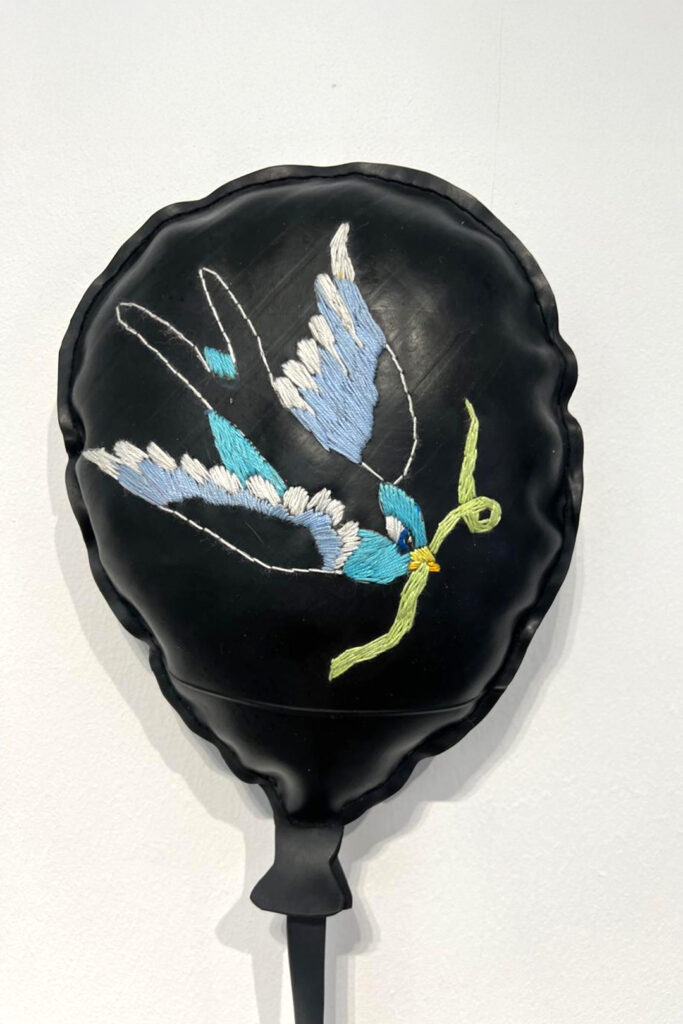
HANNALIE TAUTE
Home-coming, 2025
Polyester fibre filling, thread and rubber
123 x 25 x 7cm
Artist Reflection
Artist Reflection Transcript
“Going home can be comforting and claustrophobic.
Sometimes you return as someone else.”
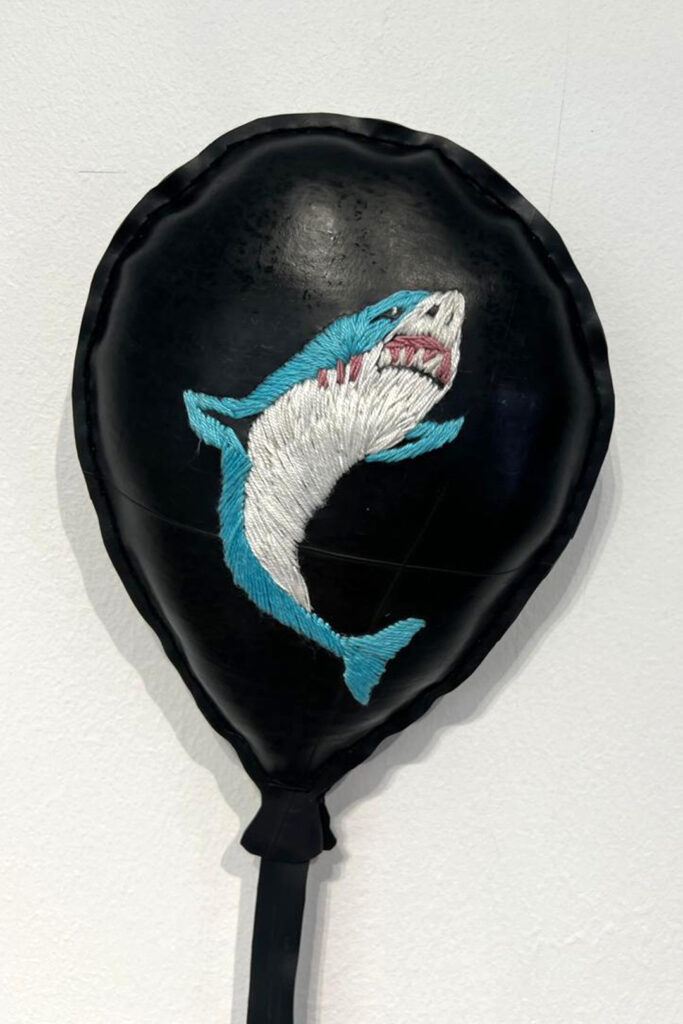
HANNALIE TAUTE
Keep out of reach of children, 2025
Polyester fibre filling, thread and rubber
115 x 19 x 5cm
Artist Reflection
Artist Reflection Transcript
“Why a shark? Because some worries have teeth.
Some days you’re the adult.
Some days you’re the warning label.”
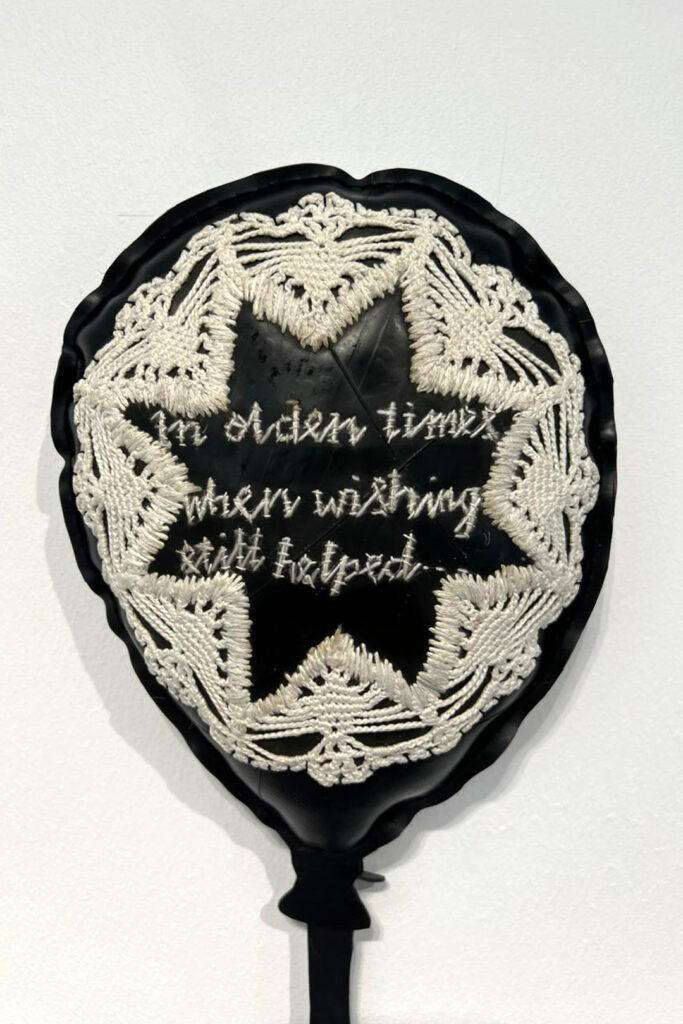
HANNALIE TAUTE
Make a wish, 2025
Polyester fibre filling, thread and rubber
120 x 25 x 7cm
Artist Reflection
Artist Reflection Transcript
“Wishes feel harmless until they want something back.
This one keeps its eyes open.”
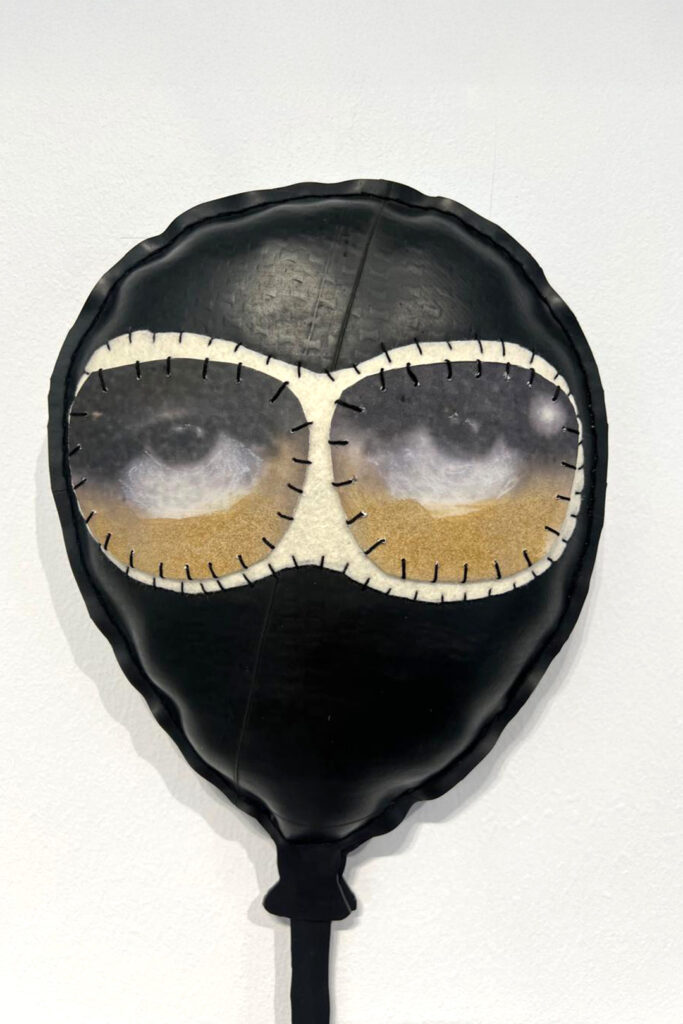
HANNALIE TAUTE
Meh! , 2025
Polyester fibre filling, thread, fabric, and rubber
110 x 25 x 7cm
Artist Reflection
Artist Reflection Transcript
“This one is pure mood.
No explanation needed.”
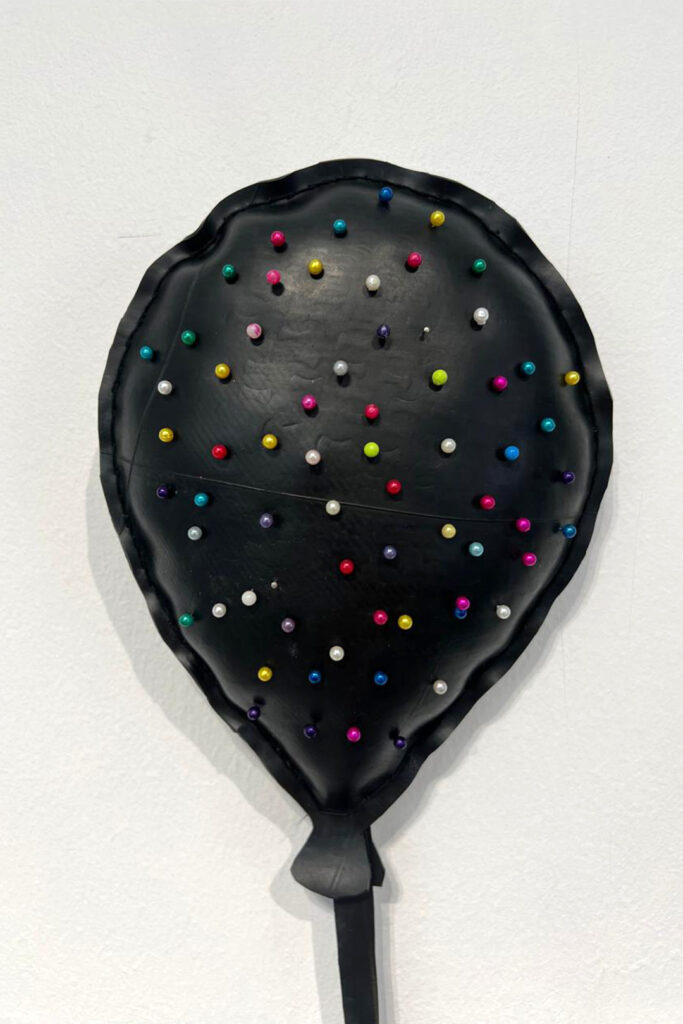
HANNALIE TAUTE
Pin-cushion, 2025
Polyester fibre filling, pins and rubber
109 x 19 x 7cm
Artist Reflection
Artist Reflection Transcript
“Pain can look decorative if you arrange it neatly.
This balloon knows that too well.”
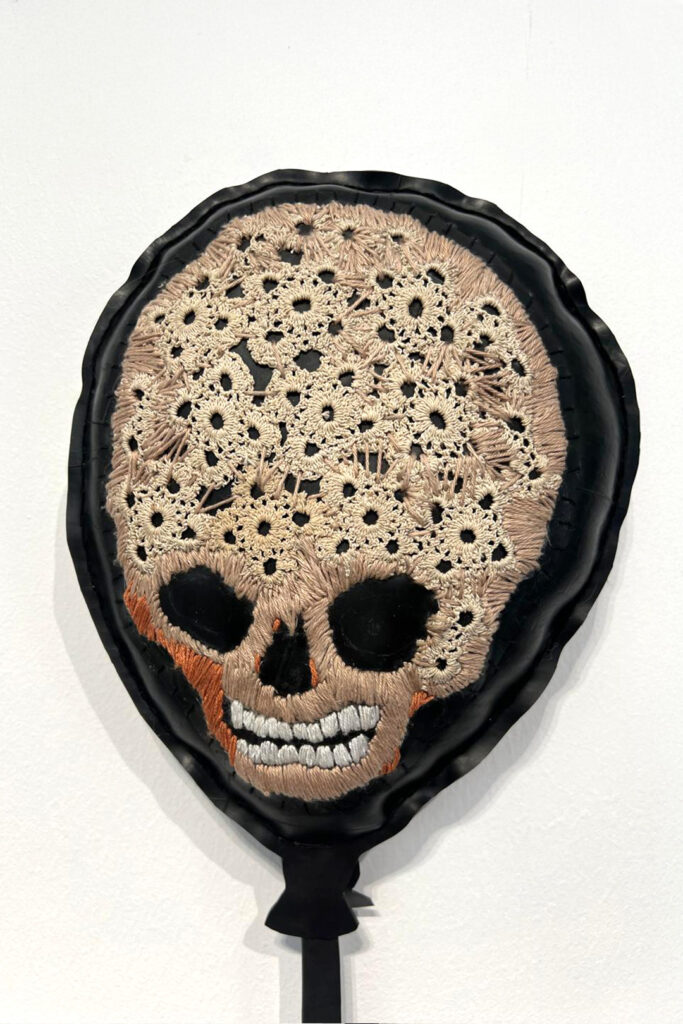
HANNALIE TAUTE
Putting the fun back in funeral, 2025
Polyester fibre filling, thread and rubber
116 x 25 x 6cm
Artist Reflection
Artist Reflection Transcript
““This balloon has a sense of humour about doom.
Not laughing at death – just at how seriously we stage it.”
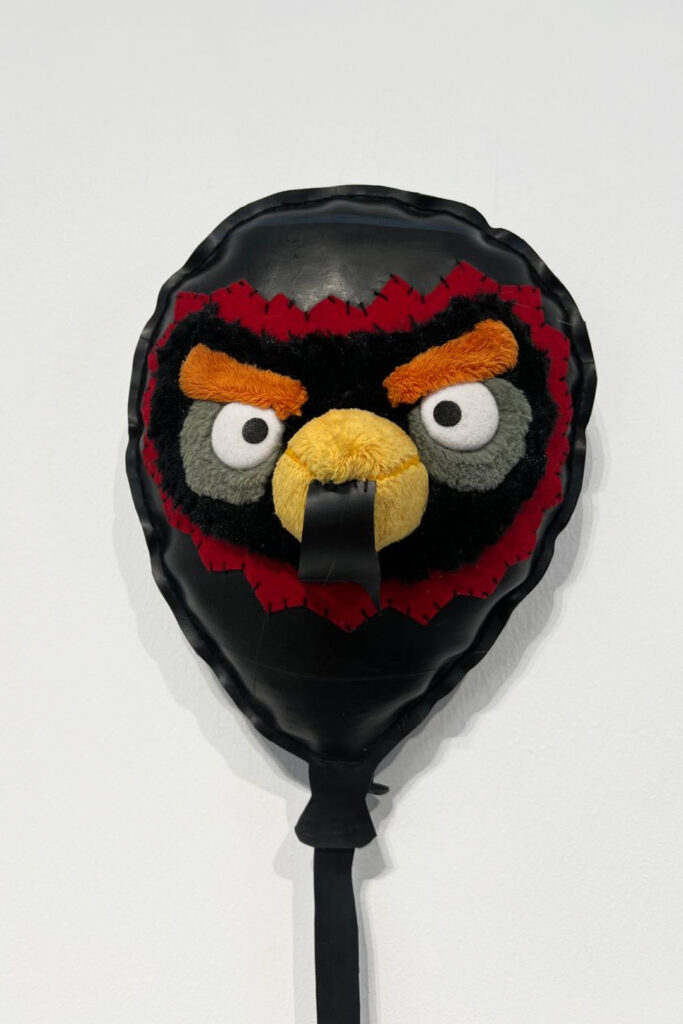
HANNALIE TAUTE
Is it a bird? Is it a bomb? No, it’s a balloon!, 2025
Polyester fibre filling, thread and rubber
126 x 23 x 14 cm
Artist Reflection
Artist Reflection Transcript
“All fury on the surface, nothing explosive underneath.
A balloon pretending to be more than it is, like most fears.”
Worry Dolls
Taute reimagines them as creatures that refuse that quiet.
These figures are stitched from contradiction: lace against rubber, softness against abrasion, comfort against threat. Their bodies feel assembled rather than born – patched together the way worries accumulate: unevenly, secretly.
Limbs misalign, faces distort, emotions rupture through the seams.
These dolls do not soothe. They signal.
Here, worry becomes somatic – a physical event.
A thought becomes a limb.
Anxiety becomes a material.
Shame becomes shape.
Instead of carrying fear away, Taute’s dolls show what happens when emotional labour overwhelms its container, when the polite surface splits and the feeling underneath insists on form.
They are not guardians of worry.
They are the worry made flesh.
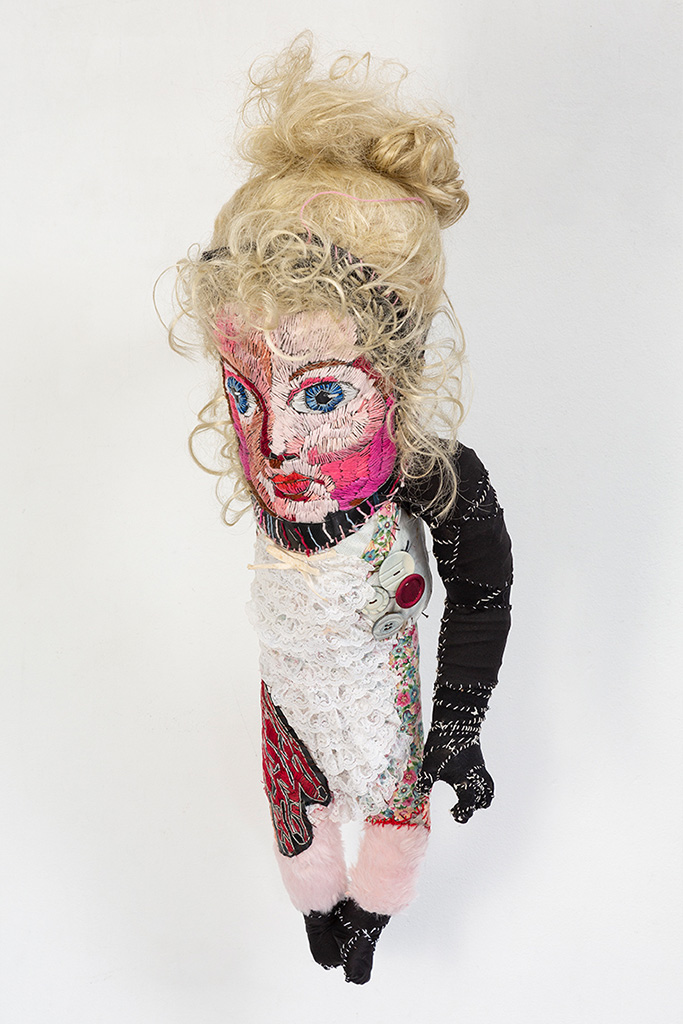
HANNALIE TAUTE
Blonde ambition aka red right hand, 2018
Fabric, found objects, cotton thread and rubber
87 x 23 cm
Artist Reflection
Artist Reflection Transcript
“You see the hair first – big, blonde, a little wild.
She looks like she’s keeping it together, but her face betrays her.
Those stitched lines… they’re not decoration. They’re strain.
And the red right hand … that’s the secret part.
It’s a symbol, you know – the thing we don’t talk about.
The mistake, the guilt, the thing you pretend never happened.
Every woman carries one, even if she hides it behind lace.
She’s a worry doll for grown-ups,
built to hold the things you can’t admit you’re capable of.”
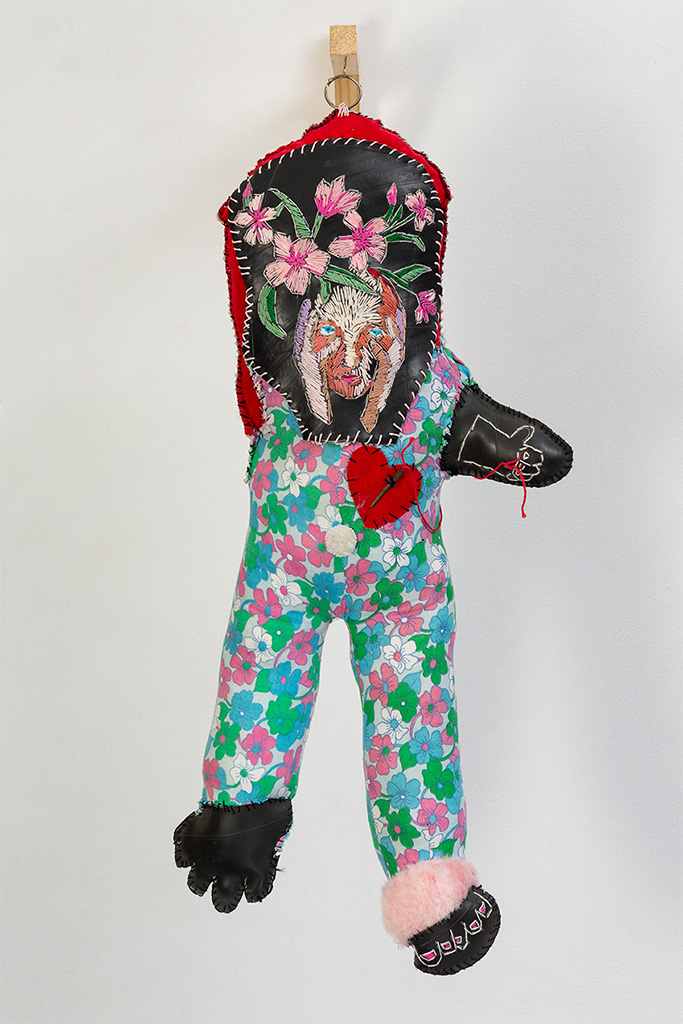
HANNALIE TAUTE
Poisonous Thoughts, 2018
Fabric, found objects, cotton thread and rubber
64 x 25 cm
Artist Reflection
Artist Reflection Transcript
“Some days your mind feels like this – blooming and choking at the same time.
I stitched the flowers right out of the skull because that’s how worry works: it grows in the wrong places.
The little red heart on the chest?
That’s the part that keeps going,
even when the thoughts turn sharp.
She doesn’t fix the poison;
she just shows the shape of it.”
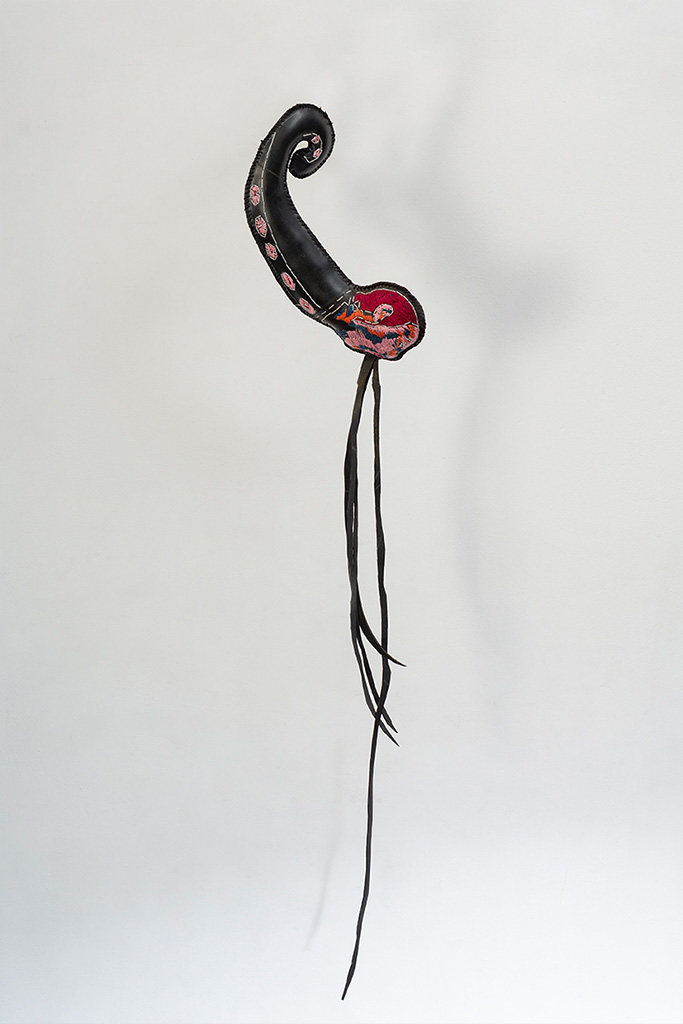
HANNALIE TAUTE
Nausea, 2015
Fabric, found objects, cotton thread and rubber
114 x 14 cm
Artist Reflection
Artist Reflection Transcript
“Sometimes a feeling refuses to stay inside a body,
so it twists itself into something stranger.
This piece grew long and crooked,
like a thought you can’t swallow back down.
That tiny figure tucked inside –
that’s the part of you that curls up
when everything gets too loud.
I called it Nausea because it’s that moment before the break –
when the body says what the mouth won’t.”